





{
“seoTitle”: “How to Flip a Heavy Workpiece on a CNC Machine: Second-Op Setup Tips from Donnie Hinske”,
“excerpt”: “Flipping a heavy part for its second operation is one of the riskiest moments in CNC machining. Donnie Hinske’s video, ‘So NOW we are gonna flip this thing’, is a look at that stage of heavy-duty work, and this post covers the practices behind it.”,
“blogContent”: “Note: this summary is based on the video’s title, channel, and tags (#cnc, #cncmachine, #machine, #heavy), not a full transcript. The practical points below are general best practices for the topic and may not match every detail of Donnie Hinske’s video.\n\n**Why flipping matters**\n\nIn Donnie Hinske’s video, ‘So NOW we are gonna flip this thing’, the focus is the turnover: the point where a heavy part finishes one side and has to be repositioned to machine the other. On large work, this step carries more risk than almost any single cut. A mistake can damage the part, the fixture, or the machine, and it can injure someone.\n\n**Key themes for heavy-part flips**\n\n- **Plan the lift before the flip.** Know the weight and center of gravity, and choose rated lifting gear and anchor points. Use tapped lifting holes or purpose-built lift points where the design allows.\n- **Protect finished surfaces.** Soft pads, wood, or fixture-friendly supports keep freshly machined faces from being marred when the part is set down or clamped.\n- **Re-establish your datum.** The second op is only as good as the work offset. Indicate off a known feature, use locating pins or bores, and probe where possible so both sides of the part line up.\n- **Fixturing for the second side.** The side you just machined becomes your clamping surface. Check flatness, burrs, and support so the part doesn’t rock or distort when clamped.\n- **Control your environment.** Clear the area, communicate with anyone helping, and move slowly and deliberately. Rushing a flip is how accidents happen.\n\n**Why it matters to CNC professionals**\n\nHeavy parts leave little room for error. Scrap on a large casting, weldment, or plate costs far more than on small work, and rework time adds up quickly. Shops that treat the flip as a planned operation, with a checklist and a clear process, tend to see fewer crashes and better two-sided accuracy.\n\n**Practical takeaways**\n\n1. Treat the flip as its own operation with its own plan.\n2. Verify lifting equipment ratings before every heavy move.\n3. Confirm alignment with an indicator or probe before cutting the second side.\n4. Deburr and clean contact surfaces before clamping.\n5. Run a cautious first pass or an air cut to confirm offsets.\n\nFor anyone who machines large or heavy workpieces, watching how another machinist handles a flip is a useful way to compare notes with your own shop’s process. Check out Donnie Hinske’s channel for the full video and more heavy CNC work.”
}
“`
What Should I Do Right Now?
If you’re evaluating new machining processes or equipment, our team can help you determine the best approach for your specific parts, offering guidance, insights, and practical recommendations based on your production needs and goals. Whether you’re optimizing existing workflows or exploring new manufacturing methods, we’re here to support your decision-making.
You Might Also Like

TEENY tiny cuts only have to work once!
{“seoTitle”: “Tiny Cuts, One Shot: Small-Scale CNC Machining Tips from Donnie Hinske”, “excerpt”: “Donnie Hinske looks at small-scale CNC work, where a tiny cut only…

Smooth like buttah 🧈
{“seoTitle”: “Smooth Like Buttah: What Buttery-Smooth CNC Machine Motion Says About Quality, Setup, and Surface Finish”, “excerpt”: “Few things satisfy a machinist like a CNC…
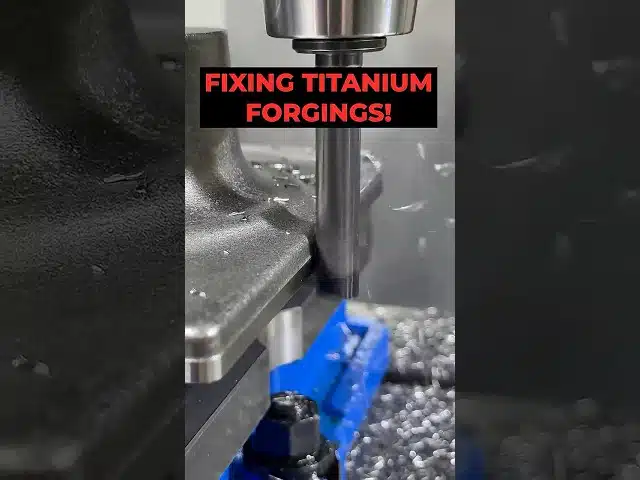
Fixing Titanium Forgings with CNC Machining: Challenges, Techniques & Expert Tips
# Fixing Titanium Forgings: The Art and Science of CNC Machining Titanium forgings are among the most challenging workpieces in the world of CNC machining.…