{“seoTitle”: “Smooth Like Buttah: What Buttery-Smooth CNC Machine Motion Says About Quality, Setup, and Surface Finish”, “excerpt”: “Few things satisfy a machinist like a CNC cutting smoothly, with no chatter, hesitation, or drama. Here is what that kind of motion signals about your setup, toolpaths, and machine health.”, “blogContent”: “Donnie Hinske’s short, \”Smooth like buttah,\” celebrates something every machinist recognizes: a CNC machine moving and cutting with effortless, fluid precision. The video is a quick visual showcase rather than a detailed tutorial, so this summary focuses on the theme it highlights and why it matters on the shop floor.\n\n**Why smooth motion matters**\n\nSmooth machine motion is more than eye candy. It is a visible sign that several things are working together: a rigid setup, well-chosen tooling, optimized feeds and speeds, and a machine in good mechanical condition. When any of these slip, the symptoms show up fast as chatter, witness marks, inconsistent surface finish, and shortened tool life.\n\n**Key factors behind a buttery cut**\n\n- **Toolpath strategy:** Continuous, flowing toolpaths with consistent chip load avoid abrupt direction changes that cause vibration and machine stress. High-efficiency and trochoidal approaches are popular for this reason.\n- **Feeds and speeds:** Running in the sweet spot for the material and tool produces clean chip evacuation and a stable cutting sound. Too slow causes rubbing, while too aggressive causes deflection.\n- **Workholding and rigidity:** Even a great program struggles if the part, fixture, or tool stick-out allows movement. Shorter tools and solid clamping are the simplest upgrades.\n- **Machine health:** Well-maintained ways, ball screws, spindle bearings, and lubrication systems directly affect how smoothly axes travel.\n- **Control settings:** Look-ahead, acceleration tuning, and smoothing parameters help the machine hold its path through complex contours.\n\n**Practical takeaways**\n\n1. Listen to your machine. A steady, consistent sound usually means a healthy cut, and a change in pitch is an early warning.\n2. Treat smooth motion as a diagnostic. If a familiar job suddenly looks or sounds rough, check tool wear, workholding, and machine maintenance before blaming the program.\n3. Optimize for consistency, not just speed. Smooth cutting often improves cycle time over the long run by extending tool life and reducing scrap and rework.\n\n**The bigger picture**\n\nIn a field where tolerances, finish, and uptime define reputation, the satisfaction of watching a machine glide through a cut is also a quality signal. Short clips like this one remind us why many of us love the craft, and they are a good prompt to audit your own processes. If your machine does not look and sound this smooth, there is likely an opportunity to improve.”}
What Should I Do Right Now?
If you’re evaluating new machining processes or equipment, our team can help you determine the best approach for your specific parts, offering guidance, insights, and practical recommendations based on your production needs and goals. Whether you’re optimizing existing workflows or exploring new manufacturing methods, we’re here to support your decision-making.
{“seoTitle”: “Tiny Cuts, One Shot: Small-Scale CNC Machining Tips from Donnie Hinske”, “excerpt”: “Donnie Hinske looks at small-scale CNC work, where a tiny cut only…
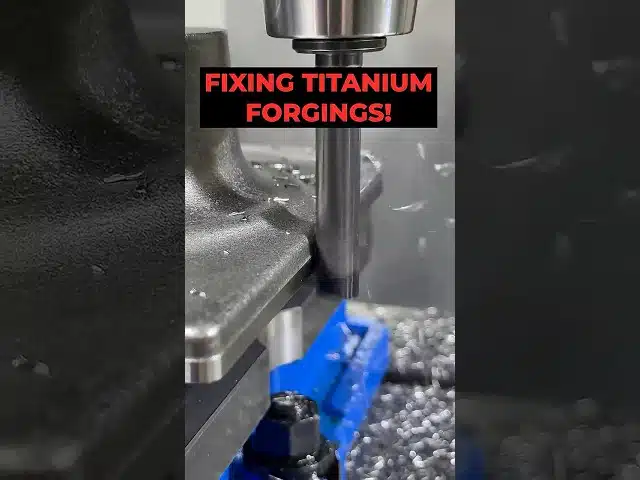
# Fixing Titanium Forgings: The Art and Science of CNC Machining Titanium forgings are among the most challenging workpieces in the world of CNC machining.…