{“seoTitle”: “Tiny Cuts, One Shot: Small-Scale CNC Machining Tips from Donnie Hinske”, “excerpt”: “Donnie Hinske looks at small-scale CNC work, where a tiny cut only has to work once. The idea is a useful reminder that precision and practicality matter more than perfection on every pass.”, “blogContent”: “Note: this summary is based on the video’s title, channel and tags, not a detailed transcript. It focuses on the theme of the video rather than specific on-screen steps.\n\nIn \”TEENY tiny cuts only have to work once!\”, Donnie Hinske takes on small-scale CNC machining. The title points to a practical idea: when a cut is tiny and the job is one-off, the process doesn’t have to be bulletproof or repeatable. It only has to succeed once.\n\n**Why this matters**\n\nMachinists often carry production habits into every job: full process documentation, robust fixturing, tool life management and repeatability checks. Those habits are essential for batch work. For a prototype, a repair, a custom part or a hobby project, they can add hours of setup for no real benefit. Knowing when to relax those standards is a valuable skill.\n\nSmall features bring their own challenges:\n\n- **Tool fragility:** Small cutters break easily, so conservative feeds, shallow engagement and good chip evacuation matter.\n- **Machine capability:** Runout, spindle speed limits and backlash are more noticeable at small scales.\n- **Workholding and setup:** Tiny parts are harder to hold and locate, and a small error is a large share of the feature size.\n- **Inspection:** Verifying small features may need magnification or more careful measurement.\n\n**Practical takeaways**\n\n1. **Match the process to the job.** For a single part, a simple setup that works once beats an elaborate one built for repeatability.\n2. **Plan for the first attempt.** If you only get one shot, test on scrap or a spare blank, and have a backup tool ready.\n3. **Respect small tooling.** Light cuts and patience usually beat pushing a tiny endmill to save a few minutes.\n4. **Know your machine’s limits.** Understanding what your equipment can reliably hold lets you decide what is realistic at this scale.\n5. **Stay practical.** Accept a good-enough result where tolerances allow, and save the extra effort for features that need it.\n\n**Industry context**\n\nBenchtop and compact CNC machines have made micro-scale work much more accessible to small shops, makers and hobbyists. These users often make one-offs, custom components and experimental parts. A pragmatic mindset helps them avoid over-engineering the process and spend their time on results.\n\n**Bottom line**\n\nNot every cut needs to be a production-grade process. For tiny, one-time operations, success comes from understanding your tooling, machine and tolerances, and then doing just enough. Watch the full video on Donnie Hinske’s channel for his specific approach and demonstration.”}
What Should I Do Right Now?
If you’re evaluating new machining processes or equipment, our team can help you determine the best approach for your specific parts, offering guidance, insights, and practical recommendations based on your production needs and goals. Whether you’re optimizing existing workflows or exploring new manufacturing methods, we’re here to support your decision-making.
{“seoTitle”: “Smooth Like Buttah: What Buttery-Smooth CNC Machine Motion Says About Quality, Setup, and Surface Finish”, “excerpt”: “Few things satisfy a machinist like a CNC…
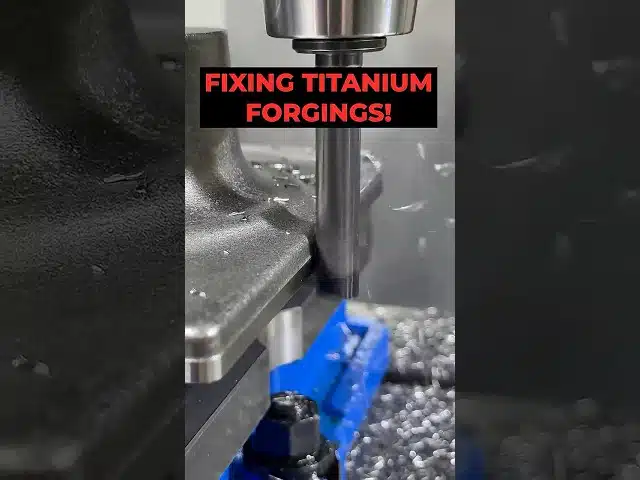
# Fixing Titanium Forgings: The Art and Science of CNC Machining Titanium forgings are among the most challenging workpieces in the world of CNC machining.…
# EATER of Titanium: The CNC Machine That Devours the Toughest Metal There’s something deeply satisfying about watching a CNC machine tear through titanium like…