






# Full Titanium Process on a Twin Turret Lathe: A Deep Dive into Advanced CNC Machining
Titanium is one of the most challenging materials to machine, yet it remains one of the most sought-after metals in aerospace, medical, and high-performance engineering applications. When you combine titanium’s demanding properties with the precision and efficiency of a twin turret lathe, you get a fascinating display of modern CNC machining at its finest. In a recent video by **Donnie Hinske**, we get an up-close look at a full titanium machining process on a twin turret lathe — and it’s nothing short of mesmerizing.
## Why Titanium Is a Machinist’s Ultimate Challenge
Before diving into the process itself, it’s worth understanding why titanium commands so much respect on the shop floor. Titanium alloys are known for their:
– **Exceptional strength-to-weight ratio** — making them ideal for aerospace and medical implants
– **Corrosion resistance** — they can withstand extreme environments without degrading
– **Low thermal conductivity** — heat doesn’t dissipate easily, which means it builds up at the cutting edge
– **Work hardening tendency** — the material becomes harder as it’s machined, making each pass more difficult than the last
These properties mean that machining titanium requires careful planning, the right tooling, proper coolant strategies, and a machine that can handle the demands. Enter the twin turret lathe.
## What Is a Twin Turret Lathe?
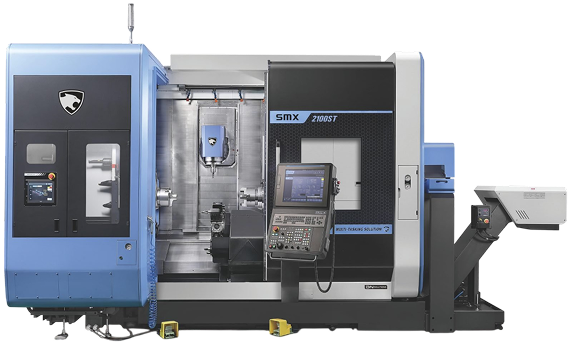
A twin turret lathe is a CNC turning center equipped with two independent tool turrets. This configuration allows the machine to perform multiple operations simultaneously or in rapid sequence. The advantages are significant:
– **Reduced cycle times** — two turrets can work on the same part at the same time, cutting production time dramatically
– **Improved accuracy** — by completing more operations in a single setup, you reduce the chances of error introduced by re-fixturing
– **Greater versatility** — with twice the tooling capacity, complex parts can be completed without stopping to change tools as frequently
– **Better surface finishes** — simultaneous cutting can balance forces on the workpiece, reducing vibration and chatter
For a material like titanium, where every second of tool engagement matters and heat management is critical, the twin turret configuration offers a strategic advantage.
## Breaking Down the Full Titanium Process
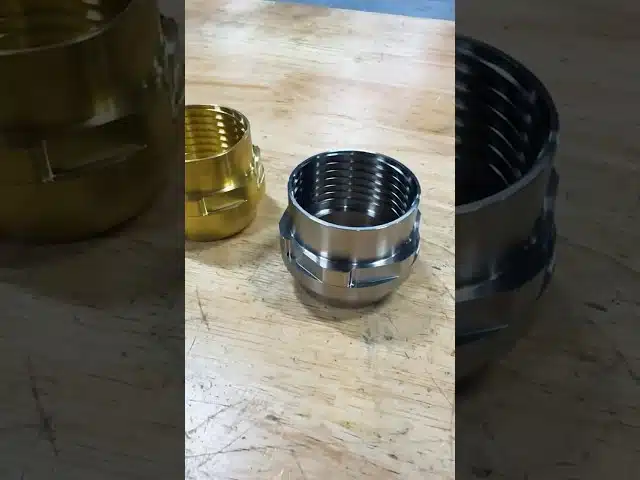
In the video shared by Donnie Hinske, we see the complete machining process unfold on a twin turret lathe. While the specifics of the part geometry aren’t detailed, the process showcases several key aspects of professional titanium turning:
### 1. Setup and Workholding
Proper workholding is essential when machining titanium. The material’s tendency to deflect under cutting forces means that the part must be securely fixtured. On a twin turret lathe, the opposing cutting forces from both turrets can actually help stabilize the workpiece, reducing deflection and improving dimensional accuracy.
### 2. Roughing Operations
The roughing phase removes the bulk of the material. With titanium, this requires:
– **Lower cutting speeds** compared to steel or aluminum
– **Consistent chip load** to avoid work hardening
– **Aggressive coolant delivery** to manage heat at the cutting zone
The twin turret setup allows roughing to happen on both sides of the part simultaneously, which is a huge time saver on a material that typically demands slower feed rates.
### 3. Finishing Passes
Once the part is roughed to near-net shape, the finishing passes bring it to final dimensions and surface finish specifications. Titanium can achieve excellent surface finishes when machined correctly, but it requires sharp tooling, appropriate speeds and feeds, and consistent coolant application.
### 4. Coolant Strategy
One thing that stands out in any professional titanium machining operation is the coolant. High-pressure coolant systems are often employed to blast chips away from the cutting zone and keep temperatures in check. On a twin turret lathe, coolant delivery must be carefully coordinated for both turrets to ensure optimal performance.
## The Art and Science of CNC Titanium Machining
What makes videos like this so compelling for machinists and manufacturing enthusiasts is the blend of art and science on display. Programming a twin turret lathe to machine titanium isn’t just about plugging numbers into a CAM system. It requires:
– **Deep material knowledge** — understanding how titanium behaves under different cutting conditions
– **Strategic tool path planning** — coordinating two turrets to work in harmony without collision
– **Tool selection expertise** — choosing the right inserts, coatings, and geometries for titanium
– **Real-world experience** — knowing when something sounds right (or wrong) on the machine
Donnie Hinske’s content consistently demonstrates this level of expertise, offering viewers a window into real-world CNC machining that goes beyond textbook theory.
## Why Twin Turret Lathes Are Gaining Popularity
The manufacturing industry is under constant pressure to reduce lead times, improve quality, and lower costs. Twin turret lathes address all three of these demands:
– **Faster production** means more parts per shift
– **Single-setup machining** means fewer opportunities for error
– **Reduced labor** since one operator can produce complex parts that might otherwise require multiple machines
For shops that specialize in difficult-to-machine materials like titanium, Inconel, or other superalloys, investing in a twin turret lathe can be a game-changer.
## Watch the Full Process
If you want to see the full titanium machining process in action, check out Donnie Hinske’s video here:
[Full Titanium Process on a Twin Turret Lathe](https://www.youtube.com/watch?v=B_v-l0tYTus)
It’s a great example of what’s possible when skilled programming, quality tooling, and a capable machine come together to tackle one of the toughest materials in the machining world.
## Final Thoughts
Machining titanium on a twin turret lathe represents the cutting edge of modern CNC manufacturing. The combination of a notoriously difficult material with a highly capable machine platform demands the best from both the equipment and the machinist. Videos like this remind us that behind every precision titanium component — whether it ends up in a jet engine, a surgical implant, or a high-performance vehicle — there’s a skilled machinist and a well-programmed machine making it happen.
Whether you’re a seasoned machinist, a CNC programming enthusiast, or simply someone who appreciates the beauty of precision manufacturing, the full titanium process on a twin turret lathe is a must-watch. It’s real machining at its finest.
What Should I Do Right Now?
If you’re evaluating new machining processes or equipment, our team can help you determine the best approach for your specific parts, offering guidance, insights, and practical recommendations based on your production needs and goals. Whether you’re optimizing existing workflows or exploring new manufacturing methods, we’re here to support your decision-making.
You Might Also Like
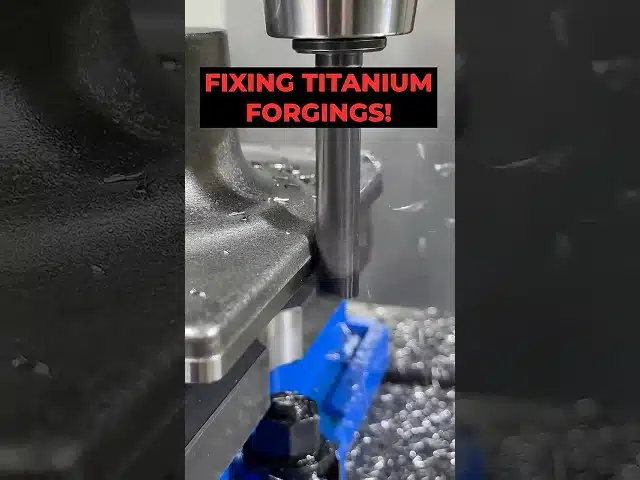
Fixing Titanium Forgings with CNC Machining: Challenges, Techniques & Expert Tips
# Fixing Titanium Forgings: The Art and Science of CNC Machining Titanium forgings are among the most challenging workpieces in the world of CNC machining.…
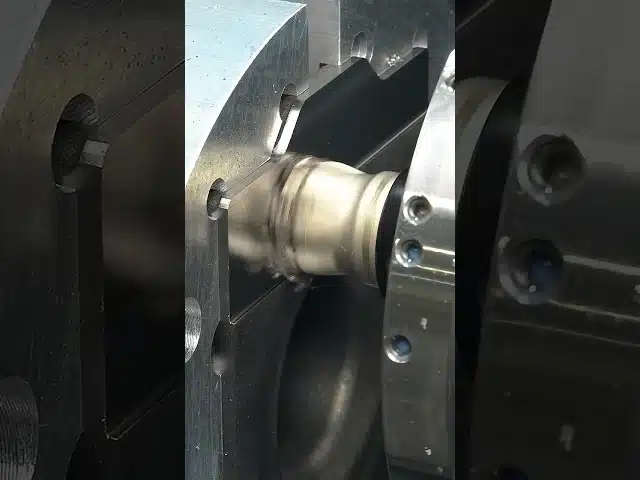
EATER of Titanium: Watch This CNC Machine Devour Titanium Like Butter
# EATER of Titanium: The CNC Machine That Devours the Toughest Metal There’s something deeply satisfying about watching a CNC machine tear through titanium like…
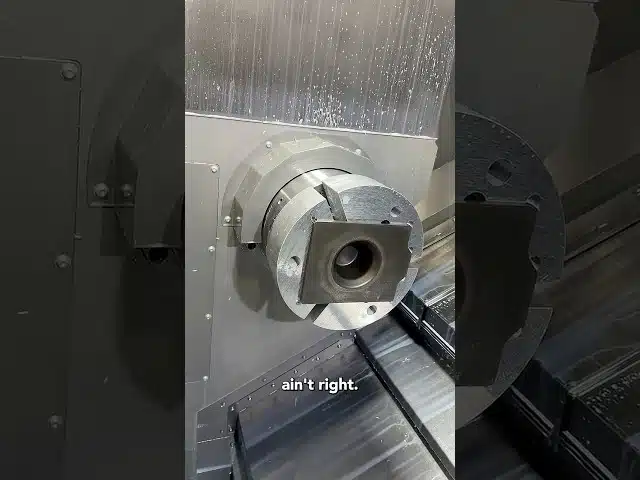
Crazy Titanium CNC Machining Part – Day 1 | Donnie Hinske’s Epic Build
# Crazy Titanium Part | Day 1: The CNC Machining Journey Begins There’s something deeply satisfying about watching raw titanium transform into a precision-engineered component…