






# This Will ALWAYS Be 3 Times Faster: The CNC Threading Technique You Need to Know
If you’re in the world of CNC machining, you know that every second counts. Cycle times directly impact productivity, profitability, and your ability to stay competitive. That’s why when a technique promises to be **3 times faster** — consistently — it’s worth paying attention to.
In a recent video by **Donnie Hinske**, a well-known voice in the CNC machining community, he breaks down a CNC threading method that delivers dramatically faster results every single time. Let’s dive into what makes this approach so effective and why you should consider implementing it in your shop.
## The Problem with Traditional CNC Threading
Traditional CNC threading cycles can be painfully slow. Whether you’re cutting internal or external threads, conventional methods often involve multiple passes at conservative depths of cut, extended dwell times, and cautious feed rates. While these approaches prioritize safety and surface finish, they can eat up valuable cycle time — especially when you’re running high-volume production.
For many machinists, threading is one of those operations that feels like it takes longer than it should. And in many cases, it does.
## The 3X Faster Approach
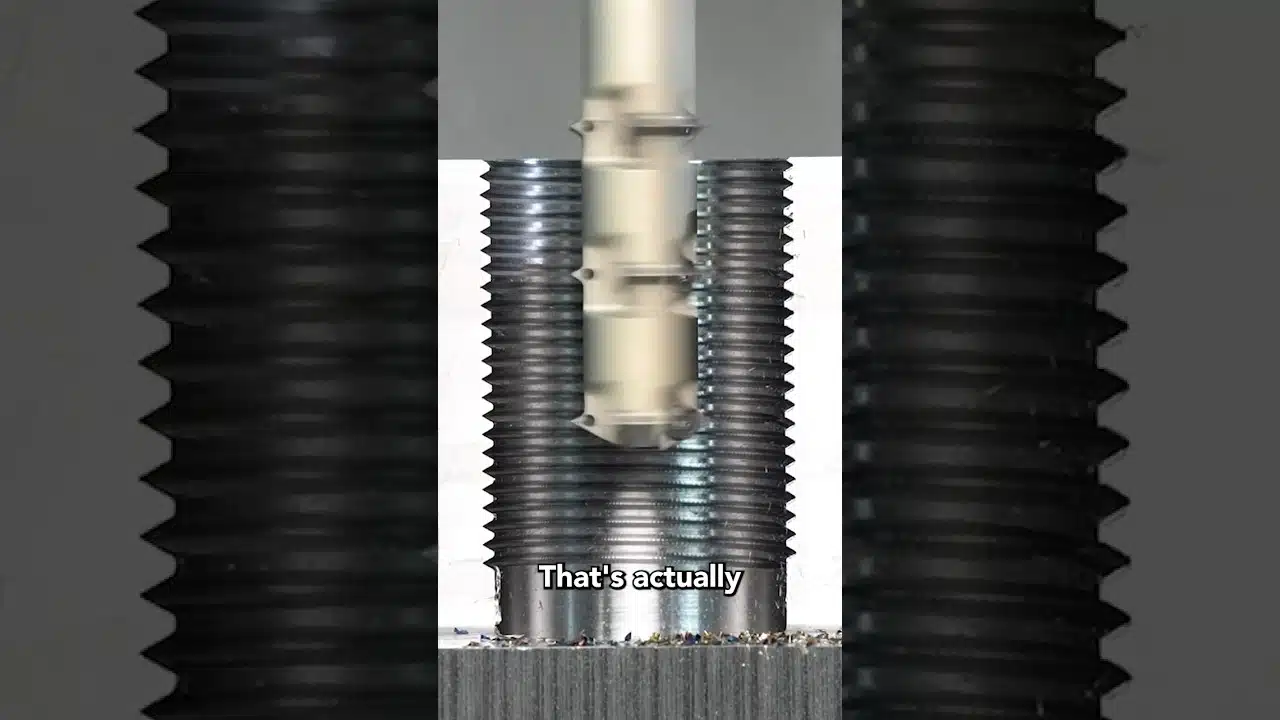
Donnie Hinske demonstrates a threading technique that consistently cuts cycle time down to roughly **one-third** of what conventional methods require. The key lies in optimizing your threading strategy — rethinking the parameters, tool paths, and approach angles that most programmers take for granted.
By fine-tuning variables such as:
– **Depth of cut per pass** — pushing the tool harder where the material and setup allow
– **Infeed method** — choosing the right infeed angle (modified flank, radial, or alternating) for the application
– **Number of spring passes** — reducing unnecessary finishing passes that don’t improve quality
– **Thread milling vs. single-point threading** — selecting the right strategy for the job
…you can achieve significant time savings without sacrificing thread quality or tool life.
## Why This Matters for Your Shop
In a production environment, shaving even a few seconds off each threading cycle adds up fast. Consider this:
– If a traditional threading cycle takes **30 seconds** and the optimized method takes **10 seconds**, you’re saving **20 seconds per part**.
– Over a run of **500 parts**, that’s nearly **3 hours** of saved machine time.
– Over the course of a year, those savings translate to **thousands of dollars** in increased capacity and reduced costs.
That’s not just an incremental improvement — it’s a game-changer.
## Key Takeaways
1. **Don’t accept default threading cycles as gospel.** Most CAM software and canned cycles use conservative parameters that prioritize safety over speed.
2. **Experiment with your infeed strategy.** The right infeed method can dramatically reduce cutting forces and allow for more aggressive passes.
3. **Reduce unnecessary spring passes.** If your thread is already meeting spec, additional passes are just wasting time.
4. **Match your strategy to the material and setup.** What works in aluminum won’t necessarily work in stainless steel, but there are optimizations available for every material.
5. **Test and measure.** Always verify thread quality with proper gauging when pushing cycle times.
## Watch the Full Breakdown
For the complete demonstration and detailed explanation, check out Donnie Hinske’s video here: [This will ALWAYS be 3 times faster](https://www.youtube.com/watch?v=DG-iesXMri8)
Donnie does an excellent job of showing real-world results on the machine, making it easy to see exactly how and why this technique works so well.
## Final Thoughts
CNC threading doesn’t have to be a bottleneck in your process. With the right approach and a willingness to push beyond default parameters, you can achieve cycle times that are **three times faster** — without compromising on quality. It’s one of those rare wins in machining where speed and precision go hand in hand.
If you’re looking to optimize your shop’s throughput, start with your threading cycles. The results might just surprise you.
—
*Want more CNC machining tips and techniques? Follow along for the latest insights from the machining community and stay ahead of the curve in your shop.*
What Should I Do Right Now?
If you’re evaluating new machining processes or equipment, our team can help you determine the best approach for your specific parts, offering guidance, insights, and practical recommendations based on your production needs and goals. Whether you’re optimizing existing workflows or exploring new manufacturing methods, we’re here to support your decision-making.


You Might Also Like
Fixing Titanium Forgings with CNC Machining: Challenges, Techniques & Expert Tips
# Fixing Titanium Forgings: The Art and Science of CNC Machining Titanium forgings are among the most challenging workpieces in the world of CNC machining.…
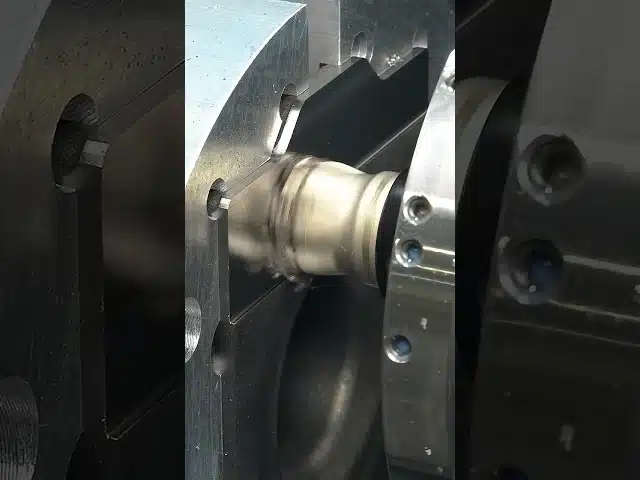
EATER of Titanium: Watch This CNC Machine Devour Titanium Like Butter
# EATER of Titanium: The CNC Machine That Devours the Toughest Metal There’s something deeply satisfying about watching a CNC machine tear through titanium like…
Crazy Titanium CNC Machining Part – Day 1 | Donnie Hinske’s Epic Build
# Crazy Titanium Part | Day 1: The CNC Machining Journey Begins There’s something deeply satisfying about watching raw titanium transform into a precision-engineered component…