






# Machining 4 TIMES Faster? The Swiss Machining Revolution
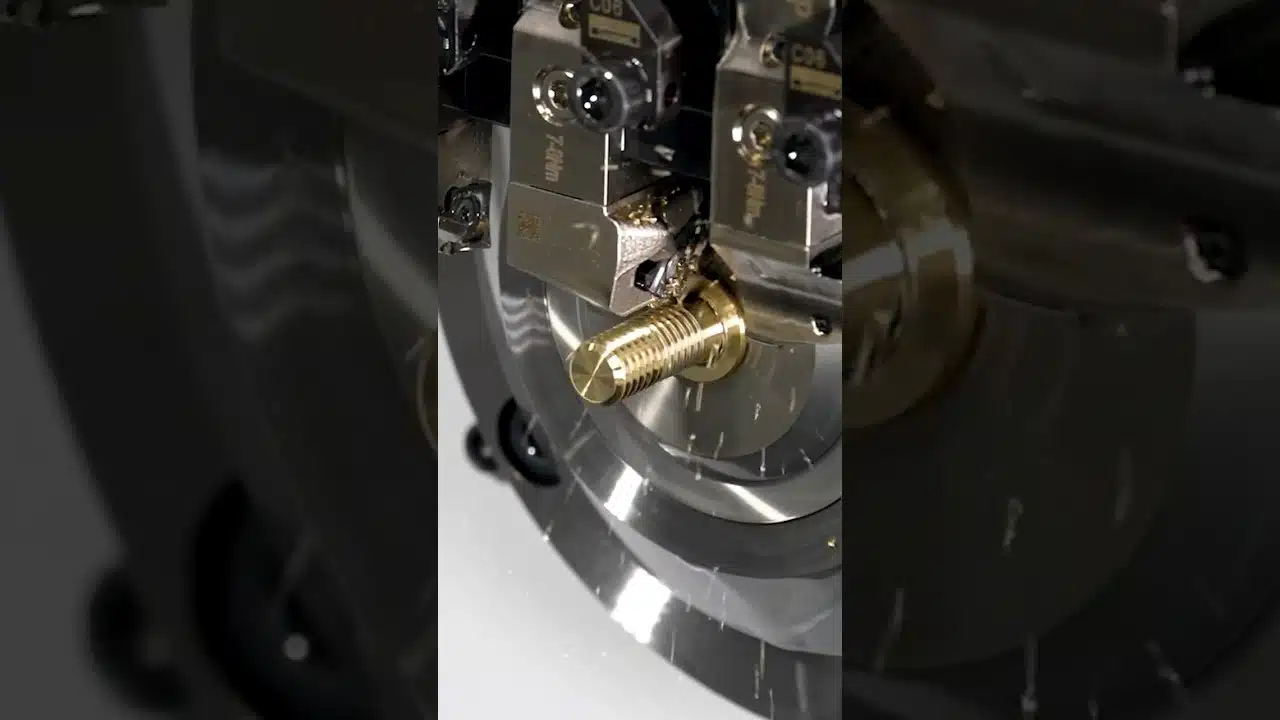
In the world of CNC machining, speed and precision are everything. When a manufacturer claims they can machine parts 4 times faster, it’s worth taking notice. This bold statement comes from Donnie Hinske’s latest video showcasing the incredible capabilities of Swiss machining technology.
## What is Swiss Machining?
Swiss machining, also known as Swiss screw machining or Swiss turning, is a specialized CNC machining process that originated in Switzerland’s watchmaking industry. Unlike conventional CNC lathes, Swiss machines feature a unique sliding headstock design that allows the workpiece to move along the Z-axis while cutting tools remain stationary.
## The 4X Speed Advantage
The claim of machining 4 times faster isn’t just marketing hype. Swiss machines achieve this remarkable speed increase through several key advantages:
### 1. **Simultaneous Operations**
Swiss machines can perform multiple operations simultaneously. While the main spindle is turning, the sub-spindle can be drilling, milling, or performing secondary operations. This parallel processing dramatically reduces cycle times.
### 2. **Superior Support**
The guide bushing supports the workpiece extremely close to the cutting point, minimizing deflection and vibration. This allows for:
– Higher cutting speeds
– Deeper cuts
– Better surface finishes
– Tighter tolerances
### 3. **Reduced Setup Time**
Once programmed, Swiss machines can run lights-out manufacturing with minimal operator intervention. The bar feeder automatically loads new material, enabling continuous production.
### 4. **Single-Setup Completion**
Many parts that would require multiple setups on conventional machines can be completed in a single operation on a Swiss machine, eliminating handling time and improving accuracy.
## Real-World Applications
Swiss machining excels in producing:
– Medical implants and instruments
– Aerospace components
– Electronic connectors
– Automotive fuel injection parts
– Watch components
– Any high-precision, small-diameter parts
## The Technology Behind the Speed
Modern Swiss machines incorporate advanced features that contribute to their impressive speed:
– **High-speed spindles** (up to 10,000 RPM or more)
– **Live tooling** for milling and drilling operations
– **Multiple axes** (up to 13 axes on some machines)
– **Advanced control systems** with look-ahead functionality
– **Precision bar feeders** for continuous material supply
## Is Swiss Machining Right for Your Project?
While the 4X speed improvement is impressive, Swiss machining isn’t suitable for every application. It’s ideal when:
– Parts have length-to-diameter ratios greater than 3:1
– Production volumes are medium to high
– Tight tolerances are required (±0.0001″ or better)
– Complex geometries need to be machined
– Material costs need to be minimized (less waste)
## The Bottom Line
The claim of machining 4 times faster with Swiss technology is achievable for the right applications. By combining simultaneous operations, superior workpiece support, and advanced automation, Swiss machines represent a significant leap forward in manufacturing efficiency.
For manufacturers looking to reduce costs, improve quality, and meet demanding delivery schedules, Swiss machining technology offers a compelling solution. As demonstrated in Donnie Hinske’s video, the future of precision manufacturing is here – and it’s moving 4 times faster than ever before.
—
*Want to learn more about Swiss machining and CNC technology? Check out Donnie Hinske’s full video demonstration and see these incredible machines in action.*
What Should I Do Right Now?
If you’re evaluating new machining processes or equipment, our team can help you determine the best approach for your specific parts, offering guidance, insights, and practical recommendations based on your production needs and goals. Whether you’re optimizing existing workflows or exploring new manufacturing methods, we’re here to support your decision-making.


You Might Also Like

PART 2: One of the Crappiest Materials to Cut in CNC Machining
# PART 2: One of the Crappiest Materials to Cut – A CNC Machinist’s Perspective Welcome back to the second part of our series on…
The Most Difficult Materials to Machine: A CNC Machinist’s Guide to Challenging Materials
# One of the Crappiest Materials to Cut: A CNC Machinist’s Nightmare Every CNC machinist has encountered materials that make them want to pull their…
Segment Thread Macro: Advanced CNC Swiss Machining Technique Guide
# Segment Thread Macro: Revolutionizing CNC Swiss Machining In the world of precision manufacturing, efficiency and accuracy are paramount. Today, we’re diving into an innovative…