






Looking for the best CNC machine for aluminum, best CNC machine for long shafts, or best CNC machine for tight tolerances? Start here. This practical guide compares turning, milling, and grinding—and shows how to match the right platform and options to your part, material, and production goals.
Start with the part (and a simple checklist)
Before you look at brands or price tags, align the machine to the work:
Your 5-point checklist
- Geometry: Round/axisymmetric (shafts, bushings) vs. prismatic (plates, housings) vs. precision-finished features (bearing fits, sealing faces).
- Size & L/D ratio: Overall envelope and, for shafts, length-to-diameter (L/D). Long, slender work is a special case.
- Tolerance & finish: Dimensional tolerance (e.g., ±0.001″ vs. ±0.0001″) and surface finish targets (e.g., 32 µin Ra vs. 8 µin Ra).
- Material: Aluminum vs. stainless/titanium vs. hardened steel—all place different demands on spindle speed/torque, coolant, and rigidity.
- Volume & changeover: Steady high-volume favors bar feeders, pallets, and robot tending; high-mix/low-volume favors flexible fixturing and faster setups.
With those answers in hand, use the decision guide below.
Turning vs. Milling vs. Grinding—when to use each
CNC Turning (lathes, millturn, and Swiss-type)
- Best for: Round parts—shafts, pins, bushings, valve spools, threaded fasteners.
- Why: In turning, the workpiece rotates while the cutting tool feeds; it’s the most efficient way to generate precise cylindrical features. (Wikipedia)
- Variants that broaden capability:
- Live tooling + Yaxis/Caxis on a turning center adds milling/drilling on the lathe—often eliminating a secondary mill setup and improving accuracy due to fewer re-clamps. Yaxis turning (a threeaxis, simultaneous method) enables complex shapes/pockets with one tool on millturn platforms. (Sandvik Coromant)
- Swisstype (sliding headstock): Uses a guide bushing so the tool cuts right next to the support point—the goto for long, slender, smalldiameter parts that would deflect on a chucker lathe. Typical bar capacities for Swiss lines such as Citizen Cincom range roughly from 1–38 mm. (mmsonline.com)
When turning is the answer
- Long L/D parts, tight concentricity, or parts best fed from bar stock.
- Parts needing turned and milled features in one setup (livetool/Yaxis lathe).
CNC Milling (3axis, 4axis, 5axis; vertical or horizontal)
- Best for: Prismatic parts—housings, plates, brackets, molds/dies, complex 3D surfaces.
- Why: In milling, the tool rotates against a stationary workpiece; multiaxis motion creates slots, pockets, bores, and freeform surfaces.
- 5axis advantage: The major benefit is machining more faces in a single setup, cutting fixtures and reclamps (and the misalignment risk that comes with them), while improving access for shorter, more rigid tools. (mmsonline.com)
When milling is the answer
- Multiface prismatic parts, complex contours, or jobs where setup reduction improves accuracy and throughput.
CNC Grinding (surface, OD/ID cylindrical, centerless, profile/tool grinding)
- Best for: Final sizing after heat treat, ultratight tolerances, and fine surface finishes—bearing fits, sealing faces, precision bores/ODs, cutting tools.
- Why: Grinding consistently delivers finishes around 4–32 µin Ra and tolerances down to ±0.0001″, beyond typical turning/milling alone. (Norton Abrasives)
- Common platforms: Surface/profile, OD/ID cylindrical, centerless, and tool/cutter grinders—offered under groups like UNITED GRINDING (brands include Studer for OD/ID, Blohm for surface/profile, Walter for tool grinding). (grinding.com)
When grinding is the answer
- Hardened materials, tight size/roundness requirements, or finishes your print specifies in singledigit microinch Ra.
Quick picks: “Best CNC machine for [part/material type]”
These are practical starting points; your exact choice depends on envelope, tolerance, cycle time targets, and budget.
- Best CNC machine for long, slender shafts/pins (small diameter):
Swisstype lathe (sliding headstock with guide bushing). It controls deflection at the cut and excels on smalldiameter, high L/D parts. Citizen Cincom covers ~1–38 mm bar; for shorter, larger diameters, consider a fixedhead Miyano millturn. (シチズンマシナリー株式会社)
- Best CNC machine for prismatic aluminum housings and plates:
Highspeed 3 or 5axis VMC (12k–20k rpm+), with throughspindle coolant and ample tool capacity. Fewer setups on 5axis often boost accuracy and throughput. (mmsonline.com)
- Best CNC machine for stainless or titanium parts with milling + drilling:
Hightorque mill/5axis (for tough materials) and plan on highpressure coolant (≈70–80 bar / 1,015–1,160 psi, and higher if needed) to improve chip control, tool life, and deephole drilling. (Sandvik Coromant)
- Best CNC machine for medical bone screws:
Swisstype with a threadwhirling attachment—industrystandard for bone screw threads and cycle time reduction. (marucit.com)
- Best CNC machine for hardened steel bearing fits or sealing faces:
OD/ID grinding platform (e.g., Studer) or surface/profile grinding for flats—chosen for tolerances at or below ±0.0001″ and fine Ra. (grinding.com)
Match the machine’s specs to your work
1) Axis count & configuration
- Turning: 2axis for pure turning; add Caxis, live tooling, and Yaxis to mill features insitu and reduce secondary ops. Yaxis turning on millturns can machine complex shapes with a single toolpath. (Sandvik Coromant)
- Milling:
- 3axis for general prismatic work.
- 4axis for aroundthepart features/bores.
- 5axis to reach multiple faces and complex contours in one setup—the lever for setup and accuracy gains. (mmsonline.com)
2) Work envelope & bar/chuck capacity
- Ensure traverse travel (X/Y/Z) and table payload suit your largest fixtures.
- For lathes, match bar capacity (Swiss and barfed chucker) or chuck size to your raw stock. Citizen Cincom Swiss covers ~1–38 mm bar; Miyano fixedhead models commonly address larger bars or chucked billets. (Citizen Machinery)
3) Spindle: speed vs. torque
- Aluminum benefits from highrpm/highfeed strategies on rigid, highspeed spindles; stainless/titanium demand more torque and strong chip control. (Materialspecific cutting data and formulas are available from major tooling suppliers.) (Sandvik Coromant)
4) Coolant & chip control
- Highpressure coolant (HPC)—now standard at ~70–80 bar/1,015–1,160 psi on many machines—improves chip breaking, tool life, and deephole drilling in tough alloys. Consider even higher pressure for demanding turning/drilling ops. (Sandvik Coromant)
5) Guideways & rigidity
- Boxway designs enhance damping and heavycut rigidity (common for tough materials and interrupted cuts), while linear guideways favor speed and lower friction. Choose based on the cut (material, DOC, tooling) rather than dogma. (linearmotiontips.com)
6) Accuracy, thermal stability & feedback
- Look for scale feedback, thermal compensation, and proven positioning/repeatability specs if your print calls for tight fits or alignment across multiple faces—especially on grinders and 5axis mills.
7) Automation readiness
- Bar feeders for lathes; pallet systems for mills; robot tending for both. Dynamic Machine integrates Cubebox robotic cells to cover drawer stacks, trays, and rotary tables, solving labor constraints and boosting spindle utilization. (Dynamic Machine)
Realworld pairings: examples from Dynamic Machine’s lineup
Below are example categories (not an exhaustive list). If you’re in Michigan or Ontario, these are supported locally by Dynamic Machine’s applications and service teams.
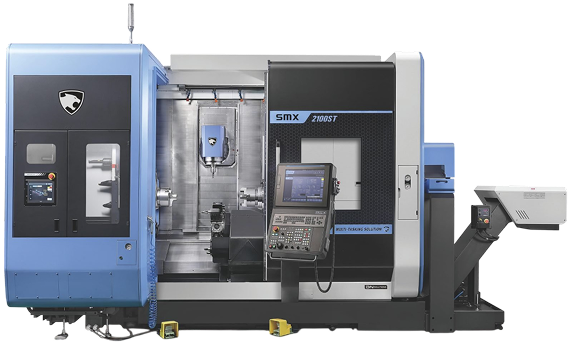
- MillTurn & Lathes (round parts, with milled features):
DN Solutions (formerly Doosan) turning centers—including Yaxis/subspindle models for doneinone—cover a wide range of diameters and lengths. (Doosan officially rebranded to DN Solutions on June 2, 2022.)
- SwissType & FixedHead Turning:
Citizen Cincom (Swiss) for long, smalldiameter parts; Citizen Miyano (fixedhead) for larger bars/chucked billets and complex millturn work.
- Grinding (finish & tolerance work):
UNITED GRINDING group covers OD/ID, surface/profile, and tool grinding through brands like Studer, Blohm, and Walter—making it straightforward to pick the right grinder type for your print.
- Additional partners & automation:
Takamaz, FastCut, and Cubebox robotic tending cells round out highproductivity turning and lightsout options.
FAQs
Do I really need 5axis?
If the part needs multiple orientations or long tool reach, 5axis often cuts setups and improves accuracy by finishing more faces in one clamp—especially on complex housings and contoured parts. (mmsonline.com)
Swiss vs. chucker lathe—how do I choose?
Pick Swisstype for smalldiameter, long parts (the guide bushing controls deflection). Use a fixedhead chucker for shorter, largerdiameter work or when heavy milling on the lathe dominates. (mmsonline.com)
When is grinding required (instead of “just milling it better”)?
Use grinding when your print demands tighter than ±0.0002″ or singledigit Ra finishes, or when you’re sizing after heat treat. It’s the reliable path to precision and fine surface integrity. (Norton Abrasives)
What about coolant pressure—does it really matter?
Yes—70–80 bar (≈1,015–1,160 psi) HPC is now common and can transform chip control, holemaking, and tool life in difficult materials; some applications benefit from even higher pressures. (Sandvik Coromant)
Box ways or linear guides?
Choose based on the cut: box ways excel at damping/rigidity for heavy, tough cuts; linear guides favor speed/low friction for highspeed machining. (linearmotiontips.com)
Ready for a precise recommendation?
Dynamic Machine pairs machine selection with time studies, tooling/fixturing, robot tending (Cubebox), installation, training, and longterm service—so you don’t just buy a machine, you launch a process that hits your print and your takt time.
- Explore CitizenCincom (Swiss) and Miyano (fixedhead) for precision turning.
- See DN Solutions turning/millturn options, including doneinone configurations.
- Ask about UNITED GRINDING platforms when tolerances/finish drive the decision.
- Add Cubebox automation to stabilize throughput and labor.
Bring us your print (material, annual volume, target cycle time, tolerance/finish). We’ll recommend a platform (turning, milling, grinding), the right options (axes, spindle, coolant, bar/chuck/pallet), and an automation path to hit your ROI.
What Should I Do Right Now?
If you’re evaluating new machining processes or equipment, our team can help you determine the best approach for your specific parts, offering guidance, insights, and practical recommendations based on your production needs and goals. Whether you’re optimizing existing workflows or exploring new manufacturing methods, we’re here to support your decision-making.


You Might Also Like
CNC Lathe Cutter Compensation Guide: Master G40, G41, G42 Programming
# Understanding Cutter Compensation on CNC Lathes: A Complete Guide Cutter compensation is one of the most powerful yet often misunderstood features in CNC lathe…
Why This CNC Part Catcher is Revolutionizing Machine Shop Productivity
# The Game-Changing Part Catcher That Every CNC Shop Needs If you’ve spent any time in a CNC machine shop, you know the constant challenge…
Swiss Army Knife CNC Programming: Master Multi-Function Swiss Lathe Operations
# Swiss Army Knife For Your Swiss Machine: Mastering Multi-Function CNC Programming In the world of precision manufacturing, Swiss-type CNC machines are renowned for their…