






# I Didn’t Think This Would Work: A CNC Machining Risk That Paid Off
Every machinist has been there — staring at a setup, a toolpath, or a part geometry and thinking, “There’s no way this is going to work.” But sometimes, the best lessons in CNC machining come from pushing past that doubt and hitting the cycle start button anyway.
In a recent video from **Donnie Hinske**, we get to witness one of those exact moments. The title says it all: *”I didn’t think this would work.”* And yet, against expectations, it did.
## Taking Calculated Risks in CNC Machining
Risk management is a concept that extends far beyond boardrooms and financial portfolios. In the world of CNC machining, it’s something machinists deal with on a daily basis. Every time you set up a new job, choose a cutting strategy, or push your tooling to its limits, you’re making a risk assessment — whether you realize it or not.
The key distinction is between **reckless risk** and **calculated risk**. A reckless risk ignores the variables and hopes for the best. A calculated risk involves understanding the potential outcomes, weighing the consequences, and making an informed decision to proceed.
What makes Donnie’s approach so relatable is the honesty in admitting the uncertainty. He wasn’t blindly confident — he genuinely didn’t think the approach would work. But he tried it anyway, armed with enough knowledge and experience to manage the situation.
## Why Pushing Boundaries Matters
If machinists only ever stuck with what they knew would work 100% of the time, the industry would never evolve. Some of the most innovative techniques in CNC machining have come from someone saying, “Let’s just try it and see what happens.”
Here are a few reasons why taking smart risks in the shop is essential:
– **Skill development** — You learn more from the jobs that challenge you than from the ones you could do in your sleep.
– **Efficiency gains** — Sometimes the unconventional approach turns out to be faster, cheaper, or more effective than the textbook method.
– **Problem-solving growth** — Working through uncertainty builds the kind of intuition that separates a good machinist from a great one.
– **Innovation** — New techniques, toolpath strategies, and fixturing solutions often emerge from experimentation.
## Risk Management on the Shop Floor
So how do you manage risk effectively when you’re working with expensive materials, tight tolerances, and unforgiving deadlines? Here are some practical tips:
### 1. Start Conservative
If you’re unsure about a cut, dial back your speeds and feeds. You can always ramp up once you see how the material and tooling respond.
### 2. Use Simulation Software
Modern CAM software offers simulation tools that can help you visualize potential collisions, gouges, or other issues before you ever cut a chip.
### 3. Test on Scrap Material
Whenever possible, run your program on a piece of scrap first. It’s a small investment that can save you from costly mistakes.
### 4. Trust Your Experience
There’s no substitute for time at the machine. If something feels off, listen to that instinct. Conversely, if your experience tells you something might work despite looking unconventional, it’s worth exploring.
### 5. Document Everything
Whether the experiment succeeds or fails, write it down. Keep notes on what worked, what didn’t, and what you’d do differently next time.
## The Payoff of Persistence
What makes this video so satisfying is the payoff. Donnie went into the process with doubt, managed the risk, and came out the other side with a successful result. It’s a reminder that growth in machining — and in any craft — often lives just on the other side of uncertainty.
For anyone working in CNC machining, this is an encouraging story. Not every risk will pay off, but the ones that do can redefine what you think is possible in your shop.
## Watch the Full Video
Want to see exactly what Donnie tried and how it turned out? Check out the full video here:
👉 [I Didn’t Think This Would Work](https://www.youtube.com/watch?v=AiaQeVLDB_0)
It’s a great reminder that sometimes the best thing you can do as a machinist is trust the process, manage the risk, and hit that green button.
—
*What’s the biggest risk you’ve taken in your shop that actually paid off? Every machinist has a story — and those stories are what keep this trade exciting.*
What Should I Do Right Now?
If you’re evaluating new machining processes or equipment, our team can help you determine the best approach for your specific parts, offering guidance, insights, and practical recommendations based on your production needs and goals. Whether you’re optimizing existing workflows or exploring new manufacturing methods, we’re here to support your decision-making.
You Might Also Like
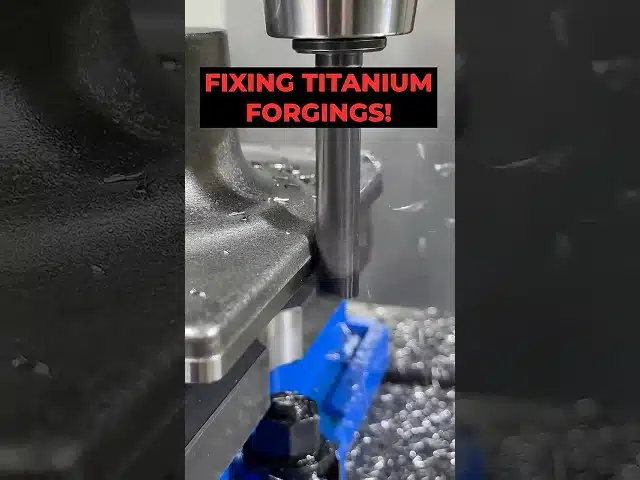
Fixing Titanium Forgings with CNC Machining: Challenges, Techniques & Expert Tips
# Fixing Titanium Forgings: The Art and Science of CNC Machining Titanium forgings are among the most challenging workpieces in the world of CNC machining.…
EATER of Titanium: Watch This CNC Machine Devour Titanium Like Butter
# EATER of Titanium: The CNC Machine That Devours the Toughest Metal There’s something deeply satisfying about watching a CNC machine tear through titanium like…
Crazy Titanium CNC Machining Part – Day 1 | Donnie Hinske’s Epic Build
# Crazy Titanium Part | Day 1: The CNC Machining Journey Begins There’s something deeply satisfying about watching raw titanium transform into a precision-engineered component…