






# This Was My LAST Resort: When CNC Machining Goes Wrong
We’ve all been there. You’re deep into a CNC machining project, everything seems to be going smoothly, and then… disaster strikes. Sometimes in manufacturing, despite our best efforts and careful planning, we find ourselves backed into a corner with no choice but to try that one desperate solution we’ve been avoiding.
## The Reality of CNC Failures
CNC machining is a precise art that demands perfection, but the reality is that failures happen more often than we’d like to admit. Whether it’s a programming error, tool wear, material inconsistencies, or machine calibration issues, there are countless ways a job can go sideways.
What separates successful machinists from the rest isn’t avoiding failures entirely—it’s knowing how to recover when things go wrong.
## Common CNC Machining Failures
### 1. Tool Breakage
One of the most common and frustrating failures. It can happen due to:
– Incorrect speeds and feeds
– Worn tools pushed beyond their limits
– Unexpected material hardness
– Programming errors causing crashes
### 2. Dimensional Errors
Nothing is more disheartening than completing a part only to find it’s out of spec because of:
– Thermal expansion
– Tool deflection
– Incorrect work offsets
– Machine backlash
### 3. Surface Finish Issues
When that mirror finish turns into a disaster:
– Chatter marks
– Built-up edge on tools
– Incorrect cutting parameters
– Coolant problems
## The “Last Resort” Mentality
When conventional solutions fail, machinists often have to get creative. These last-resort techniques might include:
– **Manual intervention**: Sometimes you have to finish by hand what the machine couldn’t
– **Creative fixturing**: Building custom jigs when standard setups won’t work
– **Unconventional tooling**: Using tools in ways they weren’t designed for
– **Process modifications**: Changing the entire approach mid-job
## Learning from Failures
Every CNC failure is a learning opportunity. The key is to:
1. **Document what went wrong**: Keep detailed notes for future reference
2. **Analyze the root cause**: Don’t just fix the symptom; understand why it happened
3. **Share with others**: The machining community thrives on shared knowledge
4. **Update procedures**: Implement changes to prevent repeat failures
## The Silver Lining
While failures are frustrating and costly, they often lead to innovation. Many breakthrough techniques in CNC machining have come from machinists forced to think outside the box when conventional methods failed.
Remember, even the most experienced machinists have their share of failures. What matters is persistence, creativity, and the willingness to try that “last resort” when everything else has failed.
## Conclusion
CNC machining failures are part of the journey. They test our skills, patience, and problem-solving abilities. The next time you find yourself reaching for that last resort solution, remember that you’re in good company. Every machinist has been there, and these challenging moments often lead to our greatest learning experiences and innovations.
Stay safe, stay persistent, and keep those chips flying!
What Should I Do Right Now?
If you’re evaluating new machining processes or equipment, our team can help you determine the best approach for your specific parts, offering guidance, insights, and practical recommendations based on your production needs and goals. Whether you’re optimizing existing workflows or exploring new manufacturing methods, we’re here to support your decision-making.
You Might Also Like
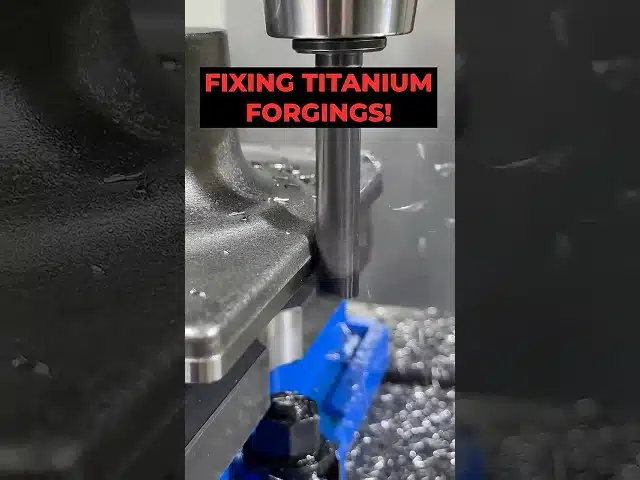
Fixing Titanium Forgings with CNC Machining: Challenges, Techniques & Expert Tips
# Fixing Titanium Forgings: The Art and Science of CNC Machining Titanium forgings are among the most challenging workpieces in the world of CNC machining.…
EATER of Titanium: Watch This CNC Machine Devour Titanium Like Butter
# EATER of Titanium: The CNC Machine That Devours the Toughest Metal There’s something deeply satisfying about watching a CNC machine tear through titanium like…
Crazy Titanium CNC Machining Part – Day 1 | Donnie Hinske’s Epic Build
# Crazy Titanium Part | Day 1: The CNC Machining Journey Begins There’s something deeply satisfying about watching raw titanium transform into a precision-engineered component…