






# Can a Fly Stay on an Endmill? The Viral CNC Experiment That Has Machinists Buzzing
In the world of CNC machining, we’ve seen all kinds of experiments — from cutting exotic materials to pushing spindle speeds to their absolute limits. But one question nobody thought to ask until now might just be the most entertaining machining experiment ever: **Can a fly stay on an endmill?**
That’s exactly what Donnie Hinske set out to answer in his viral video “Fly VS Endmill,” and the results are as fascinating as they are amusing.
## The Setup: Nature Meets Precision Engineering
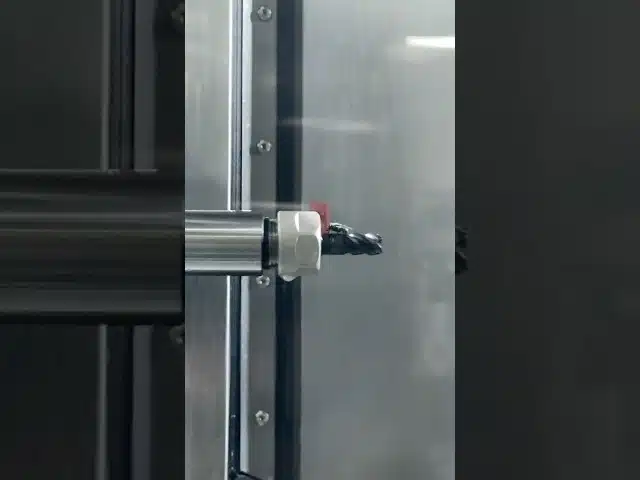
For those unfamiliar with CNC machining, an endmill is a cutting tool used in milling applications. These tools rotate at incredibly high speeds — often thousands of revolutions per minute — to cut through metals, plastics, and other materials with remarkable precision. They’re engineered for removing material, not for hosting tiny insect passengers.
So when a fly decided to land on an endmill, the stage was set for an unlikely showdown between nature and machine.
## Fly VS Endmill: What Happened?
The concept is beautifully simple. A fly lands on the endmill, and the question becomes: what happens when the spindle starts turning? Can the fly hold on? Will it fly away at the first hint of rotation? Or will centrifugal force send it spinning off into oblivion?
It’s the kind of spontaneous, curiosity-driven content that makes the machining community so engaging. Rather than a carefully planned experiment, it captures one of those random shop floor moments that every machinist can appreciate.
## Why Machinists Love This Kind of Content
There’s something deeply relatable about this video for anyone who’s spent time in a machine shop. Flies and other insects are a common (and often annoying) presence in workshops, especially during warmer months. Every machinist has swatted away a fly while trying to set up a job or watched one land dangerously close to a spinning tool.
Donnie Hinske’s video takes that everyday shop experience and turns it into must-watch content. It’s a perfect blend of humor, curiosity, and the raw power of CNC machinery.
## The Physics Behind the Fun
While the video is entertaining on its surface, there’s actually some interesting physics at play:
– **Centrifugal Force:** As the endmill spins, anything on its surface experiences an outward force. The faster the RPM, the greater the force trying to fling the fly off the tool.
– **Grip vs. Force:** Flies have remarkable adhesive pads on their feet (called pulvilli) that allow them to walk on walls and ceilings. But can those biological adhesives compete with the forces generated by a spinning cutting tool?
– **Air Turbulence:** Even before direct centrifugal force becomes a factor, the air disturbance created by a spinning endmill could be enough to dislodge a lightweight insect.
These are the kinds of questions that make this simple experiment surprisingly thought-provoking.
## The Intersection of Machining and Viral Content
Videos like “Fly VS Endmill” showcase how the CNC machining community has embraced social media and short-form content. What was once a niche trade practiced behind closed shop doors is now front and center on platforms like YouTube, TikTok, and Instagram.
Creators like Donnie Hinske are helping demystify machining and manufacturing while keeping things fun and accessible. You don’t need to know the difference between a roughing endmill and a ball nose cutter to enjoy watching a fly take on a spinning tool.
## Watch the Video
Curious to see how the fly fared against the endmill? Check out the full video here:
[Watch Fly VS Endmill on YouTube](https://www.youtube.com/watch?v=pcuuy96qd9s)
Whether you’re a seasoned machinist or just someone who appreciates a good nature-vs-machine showdown, this one is worth a watch.
## Final Thoughts
In an industry defined by precision, tolerances, and serious engineering, it’s refreshing to see content that reminds us machining can also be fun. The “Fly VS Endmill” experiment may not advance the field of manufacturing technology, but it does something equally important — it brings people together with a shared sense of curiosity and humor.
So the next time a fly lands on your tooling, maybe pause before you swat it away. You might just have viral content on your hands.
*No flies were (intentionally) harmed in the making of this content… probably.*
What Should I Do Right Now?
If you’re evaluating new machining processes or equipment, our team can help you determine the best approach for your specific parts, offering guidance, insights, and practical recommendations based on your production needs and goals. Whether you’re optimizing existing workflows or exploring new manufacturing methods, we’re here to support your decision-making.
You Might Also Like
Fixing Titanium Forgings with CNC Machining: Challenges, Techniques & Expert Tips
# Fixing Titanium Forgings: The Art and Science of CNC Machining Titanium forgings are among the most challenging workpieces in the world of CNC machining.…
EATER of Titanium: Watch This CNC Machine Devour Titanium Like Butter
# EATER of Titanium: The CNC Machine That Devours the Toughest Metal There’s something deeply satisfying about watching a CNC machine tear through titanium like…
Crazy Titanium CNC Machining Part – Day 1 | Donnie Hinske’s Epic Build
# Crazy Titanium Part | Day 1: The CNC Machining Journey Begins There’s something deeply satisfying about watching raw titanium transform into a precision-engineered component…