






# Fixing Titanium Forgings: The Art and Science of CNC Machining
Titanium forgings are among the most challenging workpieces in the world of CNC machining. Known for their incredible strength-to-weight ratio, corrosion resistance, and ability to withstand extreme temperatures, titanium components are critical in aerospace, medical, and high-performance engineering applications. But what happens when a titanium forging needs to be fixed or reworked? That’s where skilled machinists and precision CNC machines come into play.
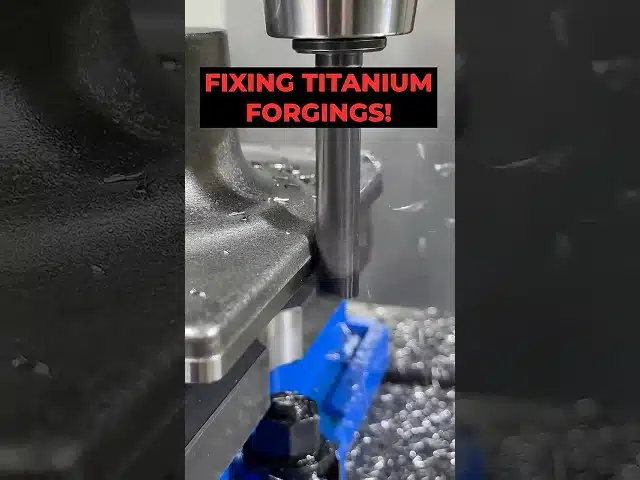
In a recent video by **Donnie Hinske**, we get an up-close look at the process of fixing titanium forgings using CNC machining — a process that demands expertise, patience, and the right equipment.
## Why Titanium Forgings Are So Difficult to Work With
Titanium is a notoriously difficult material to machine. Unlike aluminum or mild steel, titanium has several properties that make it a headache — even for experienced machinists:
– **Low thermal conductivity:** Heat doesn’t dissipate quickly, meaning it builds up at the cutting edge and can cause rapid tool wear.
– **High strength and hardness:** Titanium maintains its strength even at elevated temperatures, putting significant stress on cutting tools.
– **Chemical reactivity:** At high temperatures, titanium can react with cutting tool materials, leading to galling and premature tool failure.
– **Work hardening:** If not machined properly, titanium can harden during the cutting process, making subsequent passes even more difficult.
These challenges are amplified when working with forgings, which often have irregular shapes, varying grain structures, and residual stresses from the forging process itself.
## The CNC Machining Process for Titanium Forgings
### Setting Up the Workpiece
One of the first and most critical steps in fixing titanium forgings is proper workholding. Titanium forgings can be oddly shaped, and securing them firmly in the CNC machine without distorting the part requires careful planning. Custom fixtures, soft jaws, and sometimes even specialized clamping systems are used to ensure the workpiece remains stable throughout the machining process.
### Choosing the Right Tooling
Tool selection is paramount when machining titanium. Carbide tools with specialized coatings — such as TiAlN (Titanium Aluminum Nitride) — are commonly used. These coatings help resist the extreme heat generated during cutting and extend tool life. In some cases, machinists opt for ceramic or CBN (Cubic Boron Nitride) inserts for specific operations.
### Cutting Parameters
When machining titanium, the key is to find the sweet spot between:
– **Cutting speed:** Generally lower than what you’d use for steel or aluminum
– **Feed rate:** Moderate to high feed rates help keep the chip load consistent and prevent work hardening
– **Depth of cut:** Consistent engagement is important to avoid dwelling, which generates excess heat
– **Coolant:** High-pressure coolant systems are essential for flushing chips and keeping temperatures under control
### Fixing Defects in Forgings
When a titanium forging has defects — whether from the forging process itself, dimensional inaccuracies, or surface imperfections — CNC machining is often the go-to solution for correction. This can involve:
– **Remachining surfaces** to achieve proper dimensions and surface finish
– **Blending areas** where material inconsistencies exist
– **Correcting geometric tolerances** that may have shifted during heat treatment or forging
– **Removing surface defects** such as cracks, inclusions, or forging laps
## The Importance of Skilled Machinists
While CNC machines are incredibly capable, the human element remains essential — especially when working with challenging materials like titanium. Skilled machinists like Donnie Hinske understand the nuances of how titanium behaves under different cutting conditions. They know when to adjust feeds and speeds on the fly, how to listen for signs of tool wear, and how to program efficient toolpaths that minimize stress on both the machine and the workpiece.
## Applications of Titanium Forgings
The titanium forgings being fixed in this video could be destined for a wide range of critical applications:
– **Aerospace:** Landing gear components, engine mounts, structural airframe parts
– **Medical:** Implants, surgical instruments, prosthetics
– **Military and defense:** Armor plating, missile components, naval applications
– **Energy:** Turbine blades, heat exchangers, offshore drilling equipment
– **Motorsport:** High-performance suspension components, fasteners, exhaust systems
In all of these industries, the margin for error is virtually zero, which is why the process of fixing and reworking titanium forgings is so critical.
## Key Takeaways
1. **Titanium is one of the most challenging materials to machine**, requiring specialized tooling, careful parameter selection, and expert knowledge.
2. **Forgings add an extra layer of complexity** due to their irregular shapes, residual stresses, and varying material properties.
3. **Proper setup and workholding** are essential for achieving accurate results when fixing titanium forgings.
4. **High-pressure coolant and appropriate cutting speeds** are non-negotiable when working with titanium.
5. **Experienced machinists** are the backbone of successful titanium machining operations.
## Watch the Full Process
If you’re interested in seeing how titanium forgings are fixed using CNC machining, be sure to check out the full video from Donnie Hinske. It’s a fascinating look at the precision and skill required to work with one of the most demanding materials in manufacturing.
Whether you’re a seasoned machinist, an engineering student, or simply someone who appreciates the art of manufacturing, understanding the process of machining titanium forgings gives you a deeper appreciation for the components that make modern technology possible.
—
*Interested in more CNC machining content? Follow along for more deep dives into the world of precision manufacturing, metalworking, and the incredible machines that shape our world.*
What Should I Do Right Now?
If you’re evaluating new machining processes or equipment, our team can help you determine the best approach for your specific parts, offering guidance, insights, and practical recommendations based on your production needs and goals. Whether you’re optimizing existing workflows or exploring new manufacturing methods, we’re here to support your decision-making.


You Might Also Like
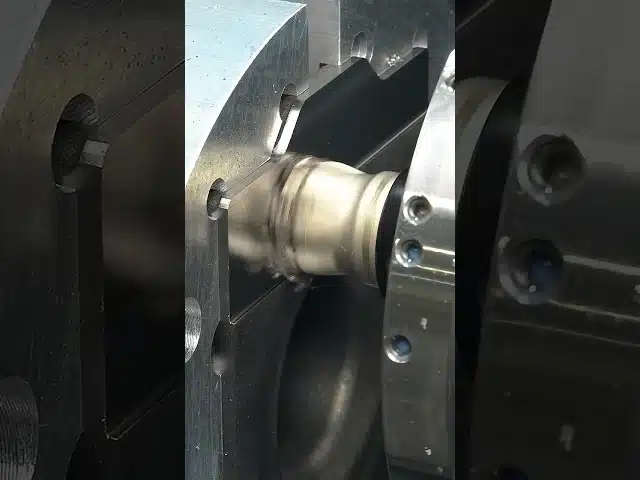
EATER of Titanium: Watch This CNC Machine Devour Titanium Like Butter
# EATER of Titanium: The CNC Machine That Devours the Toughest Metal There’s something deeply satisfying about watching a CNC machine tear through titanium like…
Crazy Titanium CNC Machining Part – Day 1 | Donnie Hinske’s Epic Build
# Crazy Titanium Part | Day 1: The CNC Machining Journey Begins There’s something deeply satisfying about watching raw titanium transform into a precision-engineered component…
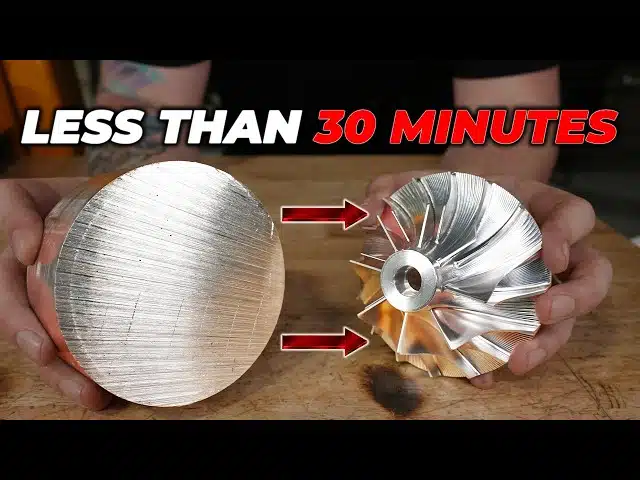
Machining an Impeller on a 5-Axis CNC: Faster and Easier Than You Think
# Machining an Impeller Does NOT Take That Long Impellers have long held a reputation as one of the most challenging parts to machine on…