






# Machining an Impeller Does NOT Take That Long
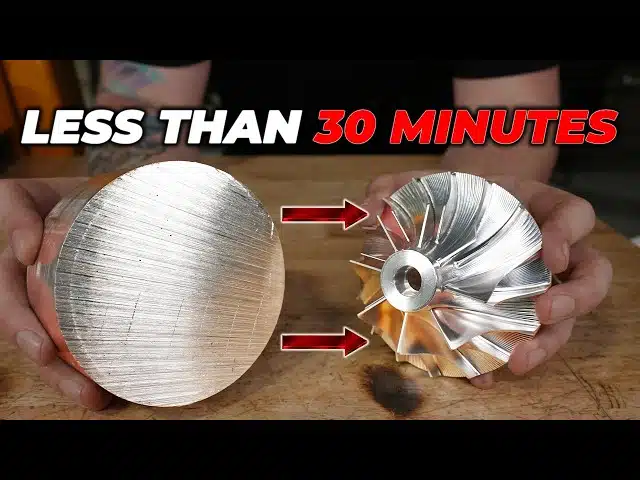
Impellers have long held a reputation as one of the most challenging parts to machine on a CNC. The complex curved blade geometries, tight inter-blade channels, and the need for simultaneous five-axis motion have intimidated many machinists — even experienced ones. But what if that reputation is overblown? What if machining an impeller is actually far more approachable than most people think?
That’s exactly the premise Donnie Hinske tackles in his latest video, where he walks viewers through the fastest possible way to machine an impeller on a five-axis CNC machine using SolidCAM. The results might surprise you — they certainly surprised him.
## The Misconception About Impeller Machining
A lot of people get impeller machining wrong — not necessarily in their technique, but in their assumptions. The common belief is that programming and cutting an impeller requires years of specialized five-axis experience, exotic tooling, and painstaking hours of CAM work. Donnie admits that even he held these assumptions before diving into this project.
The reality? With the right CAM software and a clear strategy, the programming process is remarkably straightforward. SolidCAM, in particular, offers dedicated impeller machining strategies that take much of the guesswork out of the equation. Instead of manually defining every toolpath through complex multi-surface operations, the software provides purpose-built workflows designed specifically for turbomachinery components like impellers.
## The Roughing Strategy
The bulk of Donnie’s video — and the bulk of the actual machining time — centers on the roughing strategy. This is where most of the material is removed, transforming a solid billet or near-net-shape blank into something that closely resembles the final impeller geometry.
In five-axis impeller roughing, the goal is to remove as much material as possible from the blade channels without crashing the tool into the blades themselves. This requires careful consideration of tool reach, blade wrap angles, and the depth of the inter-blade passages. SolidCAM’s impeller roughing module handles these calculations automatically, generating toolpaths that navigate the tight spaces between blades while maintaining safe clearances.
What stands out from Donnie’s approach is how accessible the setup process is within SolidCAM. Rather than spending hours tweaking individual parameters and manually adjusting tool orientations, the software’s impeller-specific strategies allow you to define your geometry, select your tools, and let the algorithms do the heavy lifting. The strategies were, in Donnie’s own words, “very easy to create.”
This is a significant point for shops considering whether to take on impeller work. The barrier to entry isn’t nearly as high as it once was, thanks to modern CAM software that has democratized access to advanced five-axis programming techniques.
## The Finishing Strategy
Once roughing is complete, the finishing strategy takes over to bring the impeller surfaces to their final dimensions and surface quality. Impeller finishing is where five-axis machining truly shines — the ability to orient the tool along the complex ruled or sculpted surfaces of each blade means you can achieve excellent surface finishes with relatively simple ball-end or barrel-style cutters.
Donnie’s finishing strategy, detailed in the video, demonstrates how SolidCAM generates smooth, flowing toolpaths that follow the blade surfaces and hub contours. The continuous five-axis motion keeps the tool in optimal contact with the workpiece, reducing cusps and minimizing the need for hand finishing or secondary operations.
For many shops, the finishing pass is where concerns about cycle time and surface quality collide. Move too fast and you risk poor surface finish. Move too slow and you lose the productivity gains that make the job profitable. Finding that balance is critical, and having CAM software that generates efficient, well-optimized finishing paths makes all the difference.
## Achieving Competitive Cycle Times
One of the most compelling takeaways from Donnie’s video is his assertion that viewers can achieve the same cycle times he demonstrates. This isn’t about having a specific brand of machine tool or a proprietary setup — it’s about leveraging the right software strategies and applying sound machining principles.
Cycle time is often the deciding factor in whether a shop can competitively bid on impeller work. If it takes too long to machine each part, the economics simply don’t work. But by using optimized roughing strategies that maximize material removal rates and finishing strategies that minimize unnecessary air cutting, the total cycle time can be brought down dramatically.
The combination of SolidCAM’s dedicated impeller module with a capable five-axis machine creates a workflow that is both fast and repeatable. For shops looking to expand into turbomachinery work — whether for aerospace, automotive turbochargers, pumps, or industrial applications — this is encouraging news.
## Why This Matters for Your Shop
The broader lesson from Donnie’s impeller machining demonstration goes beyond this single part. It speaks to a shift happening across the CNC industry: advanced machining operations that were once reserved for specialized shops with decades of experience are becoming accessible to a much wider range of manufacturers.
Modern CAM software like SolidCAM has evolved to the point where complex five-axis operations come with guided workflows, built-in collision avoidance, and application-specific strategies. You don’t need to be a five-axis wizard to produce high-quality impellers — you need the right tools and the willingness to learn.
For shops that have been hesitant to take on impeller work or other complex five-axis parts, this video serves as a compelling case study. The programming isn’t as difficult as you might think, the cycle times aren’t as long as you might fear, and the results can be genuinely impressive.
## Getting Started
If you’re interested in learning more about five-axis impeller machining or exploring what’s possible with the right equipment and software, Donnie and the team at Dynamic Machine of Detroit are great resources. You can reach out to them at [email protected] for more information.
You can also watch Donnie’s full walkthrough of the impeller machining process on his YouTube channel to see the roughing and finishing strategies in action. Sometimes seeing the toolpaths run and hearing the cut is all it takes to realize that the part you thought was impossible is well within reach.
Don’t let the reputation of a part scare you away from the work. As Donnie proves, machining an impeller really does NOT take that long.
[Watch the full video here](https://www.youtube.com/watch?v=mvg6K5wKBiI)
What Should I Do Right Now?
If you’re evaluating new machining processes or equipment, our team can help you determine the best approach for your specific parts, offering guidance, insights, and practical recommendations based on your production needs and goals. Whether you’re optimizing existing workflows or exploring new manufacturing methods, we’re here to support your decision-making.
You Might Also Like
Fixing Titanium Forgings with CNC Machining: Challenges, Techniques & Expert Tips
# Fixing Titanium Forgings: The Art and Science of CNC Machining Titanium forgings are among the most challenging workpieces in the world of CNC machining.…
EATER of Titanium: Watch This CNC Machine Devour Titanium Like Butter
# EATER of Titanium: The CNC Machine That Devours the Toughest Metal There’s something deeply satisfying about watching a CNC machine tear through titanium like…
Crazy Titanium CNC Machining Part – Day 1 | Donnie Hinske’s Epic Build
# Crazy Titanium Part | Day 1: The CNC Machining Journey Begins There’s something deeply satisfying about watching raw titanium transform into a precision-engineered component…