






# This WILL Affect Your CNC Shop: Economic Factors Every Machine Shop Owner Needs to Know
If you own or operate a CNC machine shop, the current economic landscape is something you simply cannot afford to ignore. In a recent video, machinist and shop owner Donnie Hinske breaks down the economic forces that are poised to impact CNC shops across the country — and his insights are worth paying close attention to.
## The Economy and Your CNC Shop Are More Connected Than You Think
It’s easy to get caught up in the day-to-day grind of running a CNC machining operation — quoting jobs, programming parts, managing tooling, and keeping spindles turning. But the broader economy has a direct and sometimes dramatic effect on the health of your shop. Whether it’s shifts in material costs, changes in customer demand, interest rates affecting capital equipment purchases, or workforce availability, macroeconomic trends trickle down to the shop floor faster than most owners realize.
Donnie Hinske, who shares regular insights from his own experience running a CNC shop, highlights the specific economic factors that shop owners should be watching closely right now.
## Key Economic Concerns for CNC Machine Shops
### Material Costs and Supply Chain Volatility
One of the most immediate ways the economy impacts CNC shops is through raw material pricing. Steel, aluminum, titanium, and specialty alloys are all subject to market fluctuations driven by global supply and demand, tariffs, and geopolitical factors. When material costs spike, margins shrink — especially on jobs that were quoted weeks or months in advance.
### Customer Demand Fluctuations
When the broader economy slows down, industries that rely on CNC machined parts — aerospace, automotive, oil and gas, medical devices, and more — tend to pull back on orders. This creates a ripple effect that can leave shops scrambling to fill their schedules. Conversely, economic booms can create capacity challenges where shops struggle to keep up with demand.
### Interest Rates and Capital Investment
For shops looking to grow by purchasing new CNC machines, interest rates play a critical role. Higher borrowing costs can delay or derail plans to invest in new equipment, limiting a shop’s ability to take on new work or improve efficiency.
### Labor Market Challenges
The skilled labor shortage in manufacturing is well-documented, but economic conditions can make it even worse. In a competitive job market, attracting and retaining qualified CNC machinists, programmers, and operators becomes more expensive and more difficult.
## What Can CNC Shop Owners Do?
While you can’t control the economy, you can control how your shop responds to it. Here are some strategies to consider:
– **Diversify your customer base.** Don’t rely too heavily on a single industry or a handful of clients. Spreading your work across multiple sectors can help buffer against downturns in any one area.
– **Lock in material pricing when possible.** Work with your suppliers to negotiate pricing agreements or buy ahead when costs are favorable.
– **Invest in efficiency.** Automation, better tooling, optimized programming, and lean manufacturing practices can help you maintain margins even when external pressures mount.
– **Build cash reserves.** Having a financial cushion gives you the flexibility to weather slow periods without making drastic cuts.
– **Stay informed.** Follow economic indicators and industry trends so you can anticipate changes rather than react to them.
## Stay Ahead of the Curve
Donnie Hinske’s message is clear: the economic environment is shifting, and CNC shop owners who pay attention and plan accordingly will be the ones who come out ahead. Ignoring these forces and hoping for the best is not a viable strategy in today’s manufacturing landscape.
Whether you’re a one-man garage shop or running a multi-million-dollar operation, understanding how the economy affects your business is essential. Take the time to evaluate your shop’s vulnerabilities, make a plan, and position yourself to thrive no matter what the economy throws your way.
For more real-world insights on running a CNC machine shop, be sure to check out [Donnie Hinske’s YouTube channel](https://www.youtube.com/@DonnieHinske) for regular updates and practical advice from the shop floor.
What Should I Do Right Now?
If you’re evaluating new machining processes or equipment, our team can help you determine the best approach for your specific parts, offering guidance, insights, and practical recommendations based on your production needs and goals. Whether you’re optimizing existing workflows or exploring new manufacturing methods, we’re here to support your decision-making.
You Might Also Like
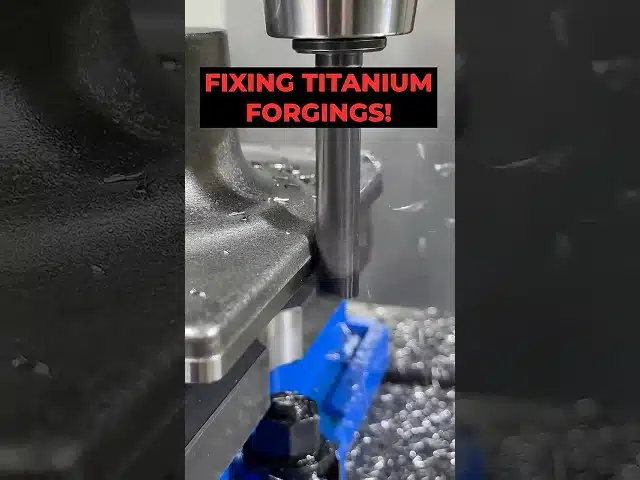
Fixing Titanium Forgings with CNC Machining: Challenges, Techniques & Expert Tips
# Fixing Titanium Forgings: The Art and Science of CNC Machining Titanium forgings are among the most challenging workpieces in the world of CNC machining.…
EATER of Titanium: Watch This CNC Machine Devour Titanium Like Butter
# EATER of Titanium: The CNC Machine That Devours the Toughest Metal There’s something deeply satisfying about watching a CNC machine tear through titanium like…
Crazy Titanium CNC Machining Part – Day 1 | Donnie Hinske’s Epic Build
# Crazy Titanium Part | Day 1: The CNC Machining Journey Begins There’s something deeply satisfying about watching raw titanium transform into a precision-engineered component…