






# How Far Can You Shoot a CNC-Machined Gear? The Surprising Answer
When precision engineering meets ballistics, you get one of the most unusual experiments in the machining world. In a recent video that’s capturing the attention of machinists and engineering enthusiasts alike, Donnie Hinske poses an intriguing question: “How far can I shoot this gear?”
## The Intersection of CNC Machining and Unconventional Testing
CNC (Computer Numerical Control) machining is typically associated with creating precision parts for industrial applications, automotive components, and aerospace engineering. However, this experiment takes a freshly machined gear and puts it through a test that no engineering textbook would ever recommend – launching it as a projectile.
## What Makes This Experiment Fascinating?
### Precision Manufacturing Meets Physics
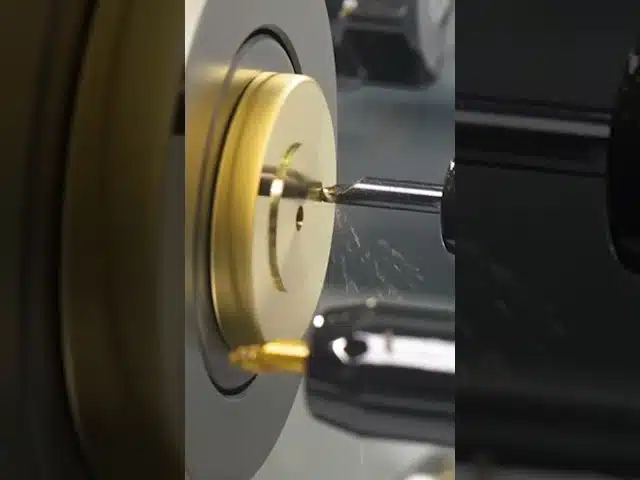
The gear in question appears to be a precisely machined component, likely created using advanced CNC milling or turning processes. The hashtags #cnc, #cncmachining, #machining, and #gears suggest this is a high-quality piece manufactured with tight tolerances. When you take something designed for rotational motion and mechanical power transmission and repurpose it as a projectile, several interesting physics principles come into play:
– **Aerodynamics**: Gears aren’t designed to be aerodynamic. Their teeth create significant drag and unpredictable flight patterns.
– **Mass Distribution**: The symmetrical design of a gear means it has even weight distribution, which could contribute to stability – or instability – during flight.
– **Material Properties**: The material used (likely steel, aluminum, or brass) affects both the projectile’s weight and its behavior upon impact.
## The CNC Machining Process Behind the Gear
Before this gear could be launched, it had to be manufactured. Modern CNC machining allows for incredible precision in gear manufacturing:
1. **CAD/CAM Design**: The gear geometry is first designed in specialized software
2. **Material Selection**: Choosing the right material for strength and machinability
3. **Cutting Process**: Using specialized gear-cutting tools or multi-axis CNC machines
4. **Quality Control**: Ensuring tooth profile accuracy and proper dimensions
## Safety Considerations and Responsible Experimentation
While this experiment is undoubtedly entertaining, it’s crucial to note that launching metal objects requires extreme safety precautions:
– Proper safety equipment
– Controlled environment
– Safe backstop and clear range
– Eye and hearing protection
– Following all local laws and regulations
## What This Means for the Machining Community
This type of content serves multiple purposes in the manufacturing and engineering community:
1. **Education Through Entertainment**: Making machining accessible and interesting to a broader audience
2. **Showcasing Precision**: Even in an unconventional application, the quality of CNC machining is evident
3. **Inspiring Creativity**: Encouraging machinists to think outside the box while maintaining safety
## The Future of CNC Content Creation
As CNC machining becomes more accessible through desktop mills and makerspaces, we’re seeing more creative applications of precision manufacturing. Content creators like Donnie Hinske are bridging the gap between traditional manufacturing and modern entertainment, making engineering concepts more approachable for newcomers to the field.
## Conclusion
While we may never need to know exactly how far a CNC-machined gear can be shot in our day-to-day manufacturing operations, experiments like these remind us that engineering is not just about following specifications – it’s about understanding materials, physics, and pushing boundaries (safely and responsibly, of course).
The next time you’re operating a CNC machine or designing a gear, remember that every precisely machined component has potential beyond its intended purpose. Just maybe leave the projectile testing to the professionals with proper safety equipment and controlled environments.
Whether you’re a seasoned machinist or someone curious about manufacturing, this unique experiment shows that the world of CNC machining can be both technically impressive and surprisingly entertaining.
What Should I Do Right Now?
If you’re evaluating new machining processes or equipment, our team can help you determine the best approach for your specific parts, offering guidance, insights, and practical recommendations based on your production needs and goals. Whether you’re optimizing existing workflows or exploring new manufacturing methods, we’re here to support your decision-making.
You Might Also Like
Fixing Titanium Forgings with CNC Machining: Challenges, Techniques & Expert Tips
# Fixing Titanium Forgings: The Art and Science of CNC Machining Titanium forgings are among the most challenging workpieces in the world of CNC machining.…
EATER of Titanium: Watch This CNC Machine Devour Titanium Like Butter
# EATER of Titanium: The CNC Machine That Devours the Toughest Metal There’s something deeply satisfying about watching a CNC machine tear through titanium like…
Crazy Titanium CNC Machining Part – Day 1 | Donnie Hinske’s Epic Build
# Crazy Titanium Part | Day 1: The CNC Machining Journey Begins There’s something deeply satisfying about watching raw titanium transform into a precision-engineered component…