






TL;DR: In manufacturing, “turnkey” means delivered ready to run—one partner engineers the process, supplies the CNC machine and tooling, integrates automation, proves out parts, trains your team, and supports production so you can hit rate faster with less risk. That endtoend approach cuts coordination time, reduces launch risk, and improves total cost of ownership.
What “turnkey” really means in manufacturing
In plain English, turnkey means built and supplied complete and ready to operate. In a factory context, the provider manages the entire scope required to deliver a running process—not just the hardware. (Merriam-Webster)
Dynamic Machine uses this model to deliver single machines and multimachine, turnkey systems, not just equipment.
What’s included in a CNC turnkey (typical scope)
A true turnkey program bundles everything needed to ship qualified, good parts at rate:
- Application engineering & process design (cycle time targets, roughing/finishing strategy, cutting data).
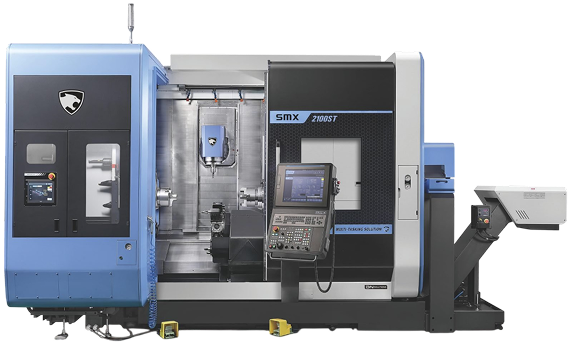
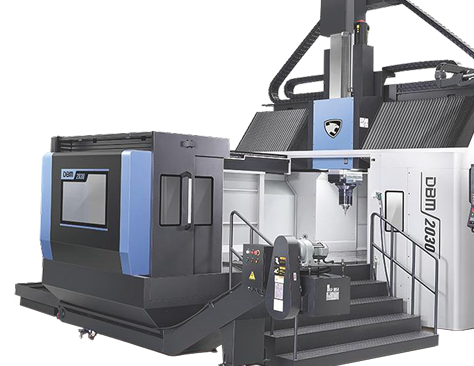
- Machine selection (e.g., turning centers and 5axis mills from DN Solutions, Swisstype lathes from Citizen/Cincom and Miyano, production turning from Takamaz and Fuji, and grinding solutions), matched to tolerance, volume, and material.
- Workholding & fixturing, tooling, and CAM/post setup with documented offsets and tool lists.
- Automation & part handling (robotic tending cells like CubeBOX), configured to your mix/volume. CubeBOX cells are robotagnostic (can integrate with brands like FANUC) and are engineered specifically for CNC tending.
- Metrology plan & documentation (inspection, GR&R, and—if required—PPAP evidence).
- Acceptance testing:
- Runoff / FAT (Factory Acceptance Test) at the builder/integrator to verify the system before shipment.
- SAT (Site Acceptance Test) after installation to validate integration with plant utilities, safety, and quality requirements.
- Operator & programmer training and onsite startup support to accelerate rampup. Dynamic Machine includes free training for customers and offers custom courses.
- Service, parts, and preventive maintenance programs for sustained uptime.
Why this matters: Instead of coordinating six vendors (machine, tooling, robot, CAM, workholding, metrology), you hold one partner accountable for schedule, performance, and cost.
Why turnkey saves time and money
1) Faster timetoproduction (less integration drag)
Integration and interoperability work—linking design, machine control, automation, and measurement—drives cost and schedule risk if left to separate teams. NIST’s work on manufacturing integration shows that closing these gaps improves quality, reduces costs, and cuts time to market; one recent NIST analysis estimates tens of billions in potential annual savings from better technology infrastructure and integration. Turnkey projects internalize that integration under a single plan. (NIST)
Turnkey also compresses rampup (the time from first part to stable, inspec volume). Research emphasizes rampup as a critical, costly phase; structured methods and training shorten it—exactly what a turnkey program formalizes. (ScienceDirect)
2) Lower launch risk via formal acceptance testing
Wellrun programs include a runoff/FAT to verify functions, takt, and quality at the supplier, and a SAT to prove the system in your plant. These steps catch issues early and prevent onsite surprises that stall production.
3) Better utilization (OEE) with rightsized automation
Increased asset utilization is a major lever. OEE (Overall Equipment Effectiveness) is the standard metric—Availability × Performance × Quality—and turnkey teams design the process to protect all three (stable feeds/speeds, incycle gauging, mistakeproofing, and unattended shifts with tending cells). (IBM)
Industry data shows automation adoption is expanding to address workforce gaps and improve throughput—context for why lightsout or “attended by robots” shifts are practical even for SMB shops. (IFR International Federation of Robotics)
4) Total cost of ownership (TCO) goes beyond purchase price
Comparing quotes on sticker price alone is misleading. TCO includes acquisition and operating costs—setup time, scrap, tool life, energy, service, training, changeover losses, and planned/unplanned downtime. Turnkey contracts make those costs visible and shared. (Investopedia)
What you’ll get from a Dynamic Machine turnkey
- Cycletime and tooling recipes proven during runoff, with digital setup sheets.
- Robottended cells (e.g., CubeBOX) configured for your part families and compatible with mainstream robots such as FANUC when specified.
- PPAP/APQP support when required (documentation, firstarticle, capability runs).
- Operator, programmer, and maintenance training (Dynamic offers free training seats for customers).
- Service & PM programs with fast response from a dedicated technical team.
- Dynamic Machine explicitly positions itself to deliver single standalone machines through complex, multimachine turnkey systems, with inhouse applications, service, and training—all in Michigan and Ontario.
Turnkey vs. “buy the machine and figure it out” (quick comparison)
| Decision factor | Traditional machine purchase | Full turnkey with Dynamic Machine |
| Time to first good part | Weeks–months of internal integration | Compressed; runoff + SAT lock in proven process |
| Risk | Multivendor gaps; fingerpointing | One accountable partner |
| Upfront scope clarity | Hardware only | Hardware and process, tooling, fixturing, programs, documents |
| OEE/Throughput | Dependent on internal resources | Designedin, validated throughput (shift plans, tending) |
| Training | Ad hoc | Structured courses + onsite launch support |
| Lifecycle cost (TCO) | Hidden integration & rampup costs | Costs surfaced and shared; fewer surprises |
When to choose turnkey (or sharekey)
Choose turnkey when you have hard deadlines, highmix/lowvolume variation, tight tolerances, or limited engineering capacity. Choose sharekey when your team wants to coengineer the process but still leverage Dynamic’s applications and project management. Dynamic offers both models.
How Dynamic Machine builds your turnkey
- Discovery & time study — define parts, materials, tolerances, rates, and quality requirements.
- Machine & automation selection — e.g., DN Solutions milling/turning, Citizen/Cincom or Miyano for Swiss/multiaxis turning, Takamaz/Fuji for production turning, and grinding options for finishing.
- Tooling/fixturing & CAM — posts and offsets finalized; errorproofing built into setup.
- Runoff/FAT — prove cycle time and Cpk on representative lots prior to shipment.
- Installation & SAT — integrate with plant utilities/safety; verify inplant quality and throughput.
- Training & handoff — Dynamic’s free training plus onsite support accelerates proficiency.
- Aftercare — service, parts, and PM to protect OEE.
Why this saves money in practice
- Less coordination waste: One schedule, one scope, one acceptance plan.
- Fewer launch surprises: FAT/SAT catch issues before they hit your line.
- Higher sustainable utilization: OEE is engineered into the process (stable feeds, better chip control, errorproof loading), and automation covers breaks/overnight.
- Transparent economics: Evaluate the investment on TCO, not sticker.
FAQ’s
What’s a runoff and why should I insist on one?
A runoff is a structured acceptance test for the complete cell. Per industry practice, you’ll see a Factory Acceptance Test (FAT) at the builder and a Site Acceptance Test (SAT) after installation to validate specs, safety, and quality in your plant. Both reduce rework and delays.
Do turnkey projects help with PPAP?
Yes. For automotive and related industries, turnkey deliverables can include the PPAP documentation and capability runs needed for customer approval.
How do you measure the benefit?
Use OEE (Availability × Performance × Quality) alongside scrap rate, changeover time, and labor per part. A turnkey program targets all three OEE factors by design.
What robots do CubeBOX cells use?
CubeBOX is designed to integrate with major robot brands (including FANUC) and CNC controls; Dynamic specifies the right robot and gripper set for your parts and takt.
Ready to benchmark your parts?
Send Dynamic Machine your print, material, and annual volumes. We’ll propose the right machine/automation mix (e.g., DN Solutions mills/turns, Citizen/Miyano Swiss, Takamaz/Fuji production lathes, grinding where it pays), outline the turnkey or sharekey scope, and map the path to first good part at rate—with training and service to keep it running.
What Should I Do Right Now?
If you’re evaluating new machining processes or equipment, our team can help you determine the best approach for your specific parts, offering guidance, insights, and practical recommendations based on your production needs and goals. Whether you’re optimizing existing workflows or exploring new manufacturing methods, we’re here to support your decision-making.


You Might Also Like
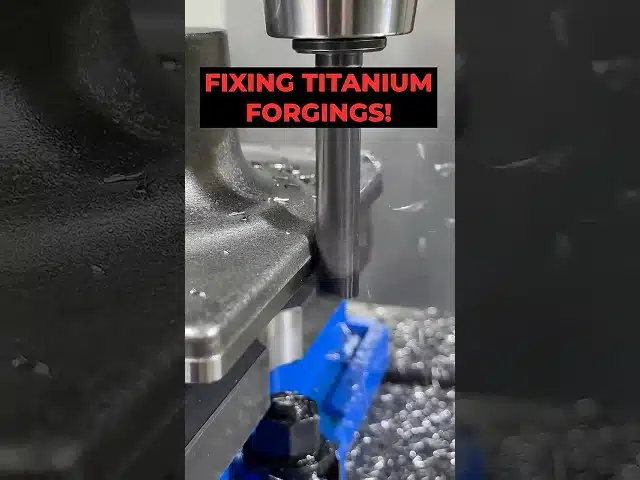
Fixing Titanium Forgings with CNC Machining: Challenges, Techniques & Expert Tips
# Fixing Titanium Forgings: The Art and Science of CNC Machining Titanium forgings are among the most challenging workpieces in the world of CNC machining.…
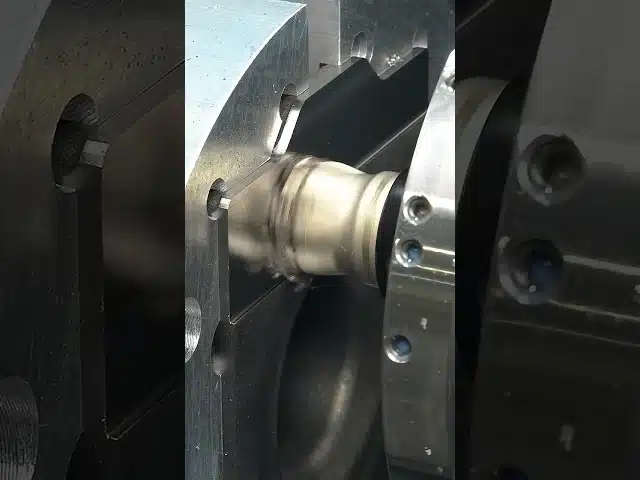
EATER of Titanium: Watch This CNC Machine Devour Titanium Like Butter
# EATER of Titanium: The CNC Machine That Devours the Toughest Metal There’s something deeply satisfying about watching a CNC machine tear through titanium like…
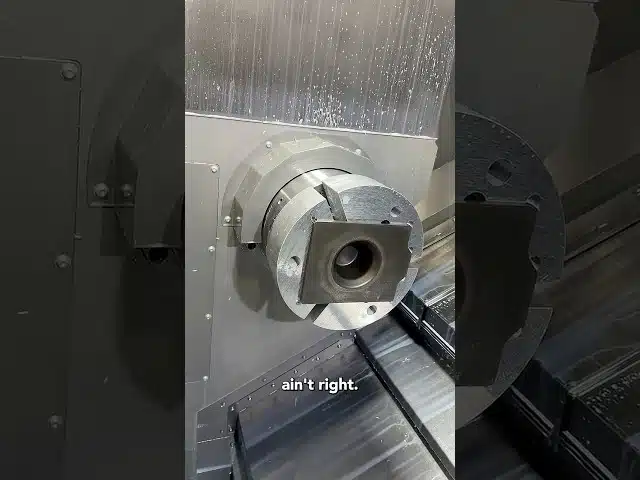
Crazy Titanium CNC Machining Part – Day 1 | Donnie Hinske’s Epic Build
# Crazy Titanium Part | Day 1: The CNC Machining Journey Begins There’s something deeply satisfying about watching raw titanium transform into a precision-engineered component…