






# 3 Tools, 3 Strategies, 3 Results: Exploring CNC Machining Approaches for Optimal Outcomes
In the world of CNC machining, there’s rarely a single “right” way to approach a job. The tooling you select, the strategy you deploy, and the parameters you dial in can dramatically influence your final result — from surface finish quality to cycle time and tool life. That’s exactly the concept explored in this fascinating demonstration by **Donnie Hinske**, where three different tools paired with three distinct strategies produce three unique results.
## The Power of Choice in CNC Machining
One of the most compelling aspects of modern CNC machining — and especially 5-axis machining — is the sheer number of options available to the machinist or programmer. Every job presents a decision tree: Which tool geometry should you reach for? What toolpath strategy will give you the best balance of speed, finish, and tool longevity? And how do those choices cascade into the final workpiece?
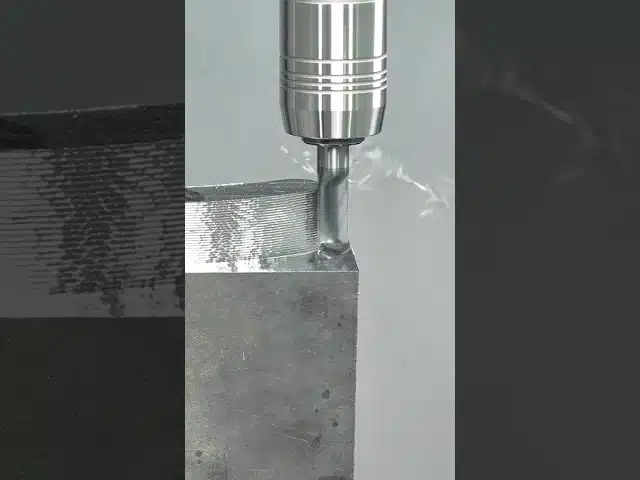
This video highlights that decision-making process in a clear, side-by-side comparison format. By running three different setups on the same feature or part, viewers get a direct look at how each variable impacts the outcome.
## Why Tool Selection Matters More Than You Think
Tool selection is often the first and most critical decision in any CNC operation. Different tool geometries — whether it’s a ball nose end mill, a bull nose cutter, or a flat end mill — interact with the material in fundamentally different ways. Each creates a unique chip load profile, engages the workpiece at different contact angles, and leaves behind a distinct surface pattern.
In 5-axis machining, the tool selection becomes even more nuanced. The ability to orient the tool relative to the workpiece surface means you can optimize the effective cutting diameter, avoid zero-speed conditions at the tip of ball nose tools, and leverage tool geometries that wouldn’t be practical on a 3-axis machine.
## Strategy: The Brain Behind the Cut
Beyond the tool itself, the machining strategy — the toolpath — is where the art and science of CNC programming truly converge. Common strategies include:
– **Parallel finishing (Z-level or contour):** Great for steep walls and consistent step-over control
– **Scallop/3D offset machining:** Maintains a uniform cusp height across complex surfaces
– **Pencil or rest machining:** Targets corners and transitions that larger tools can’t reach
– **Flow-line machining:** Follows the natural flow of a surface for smoother finishes
Each strategy has its strengths and trade-offs. A strategy that minimizes cycle time might leave a rougher surface. One that produces a mirror-like finish might take significantly longer. The key is matching the strategy to the project requirements — and sometimes, the best answer only becomes clear through direct comparison.
## 3 Results: Reading Between the Lines
The “3 results” portion of this demonstration is where the rubber meets the road. When you compare the outcomes side by side, you’re evaluating several critical factors:
– **Surface finish quality:** How smooth is the final surface? Are there visible tool marks, scallops, or witness lines?
– **Cycle time:** How long did each approach take? In production environments, time is money.
– **Tool wear:** Which approach was gentlest on the cutter? Longer tool life means lower tooling costs and fewer interruptions.
– **Dimensional accuracy:** Did the strategy maintain tight tolerances throughout the cut?
Understanding these trade-offs is what separates a good machinist from a great one.
## The 5-Axis Advantage
This demonstration takes place in the context of 5-axis machining, which opens up possibilities that simply aren’t available on 3-axis platforms. With simultaneous 5-axis motion, the machine can:
– Maintain optimal tool engagement angles across complex contoured surfaces
– Reduce the number of setups required, improving accuracy and reducing handling time
– Access undercuts and deep features that would otherwise require specialized fixturing
– Use shorter, more rigid tool assemblies for better surface finishes and tighter tolerances
The combination of 5-axis capability with thoughtful tool and strategy selection is what enables machinists to push the boundaries of what’s possible.
## Key Takeaways for CNC Machinists and Programmers
1. **Never assume there’s only one way to machine a feature.** Experiment with different tools and strategies to find the optimal combination for your specific application.
2. **Direct comparisons are invaluable.** Running side-by-side tests, as demonstrated in this video, gives you concrete data to inform future decisions.
3. **Balance your priorities.** The “best” result depends on what matters most for your project — speed, finish, accuracy, or tool life.
4. **Leverage 5-axis capabilities fully.** If you have access to a 5-axis machine, explore how tool orientation and advanced toolpath strategies can elevate your results.
5. **Document your findings.** Keep records of which tool/strategy combinations work best for specific materials, geometries, and surface finish requirements.
## Conclusion
Donnie Hinske’s “3 Tools, 3 Strategies, 3 Results” demonstration is a perfect reminder that CNC machining is as much about decision-making as it is about machine capability. The tools we choose and the strategies we deploy are the levers we pull to shape not just the workpiece, but the efficiency, quality, and economics of every job we run.
Whether you’re a seasoned 5-axis programmer or just beginning to explore advanced machining techniques, this kind of comparative approach is one of the best ways to sharpen your skills and deepen your understanding of the craft.
Watch the full video above and consider how you might apply similar comparative testing in your own shop. The results might surprise you.
What Should I Do Right Now?
If you’re evaluating new machining processes or equipment, our team can help you determine the best approach for your specific parts, offering guidance, insights, and practical recommendations based on your production needs and goals. Whether you’re optimizing existing workflows or exploring new manufacturing methods, we’re here to support your decision-making.
You Might Also Like
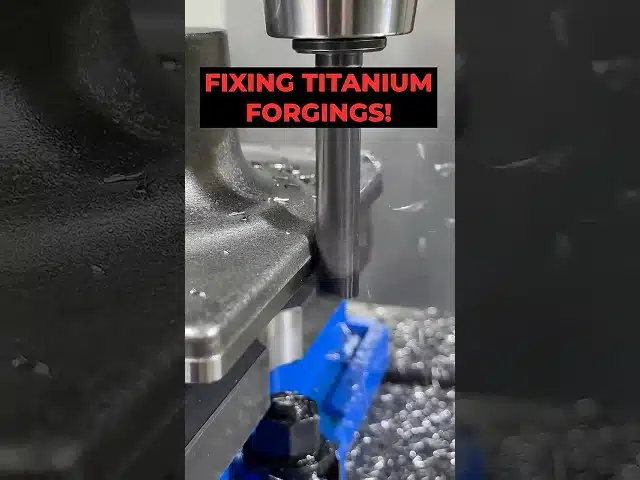
Fixing Titanium Forgings with CNC Machining: Challenges, Techniques & Expert Tips
# Fixing Titanium Forgings: The Art and Science of CNC Machining Titanium forgings are among the most challenging workpieces in the world of CNC machining.…
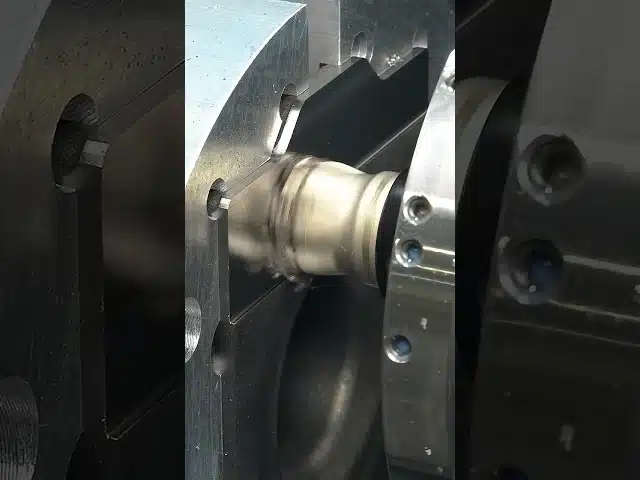
EATER of Titanium: Watch This CNC Machine Devour Titanium Like Butter
# EATER of Titanium: The CNC Machine That Devours the Toughest Metal There’s something deeply satisfying about watching a CNC machine tear through titanium like…
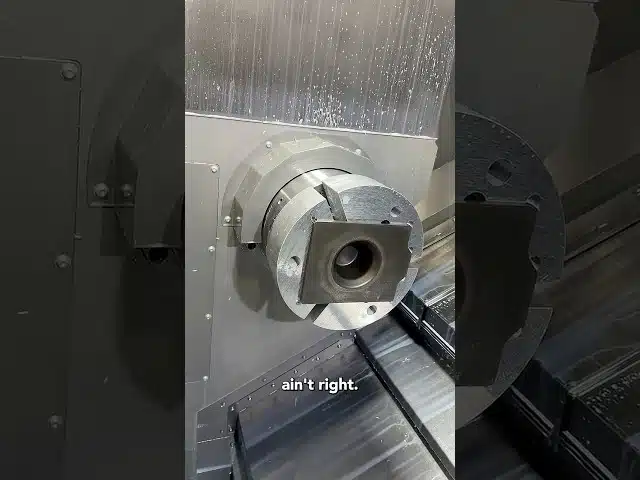
Crazy Titanium CNC Machining Part – Day 1 | Donnie Hinske’s Epic Build
# Crazy Titanium Part | Day 1: The CNC Machining Journey Begins There’s something deeply satisfying about watching raw titanium transform into a precision-engineered component…